

How Large Is the Commercial & Industrial Energy Storage Market?
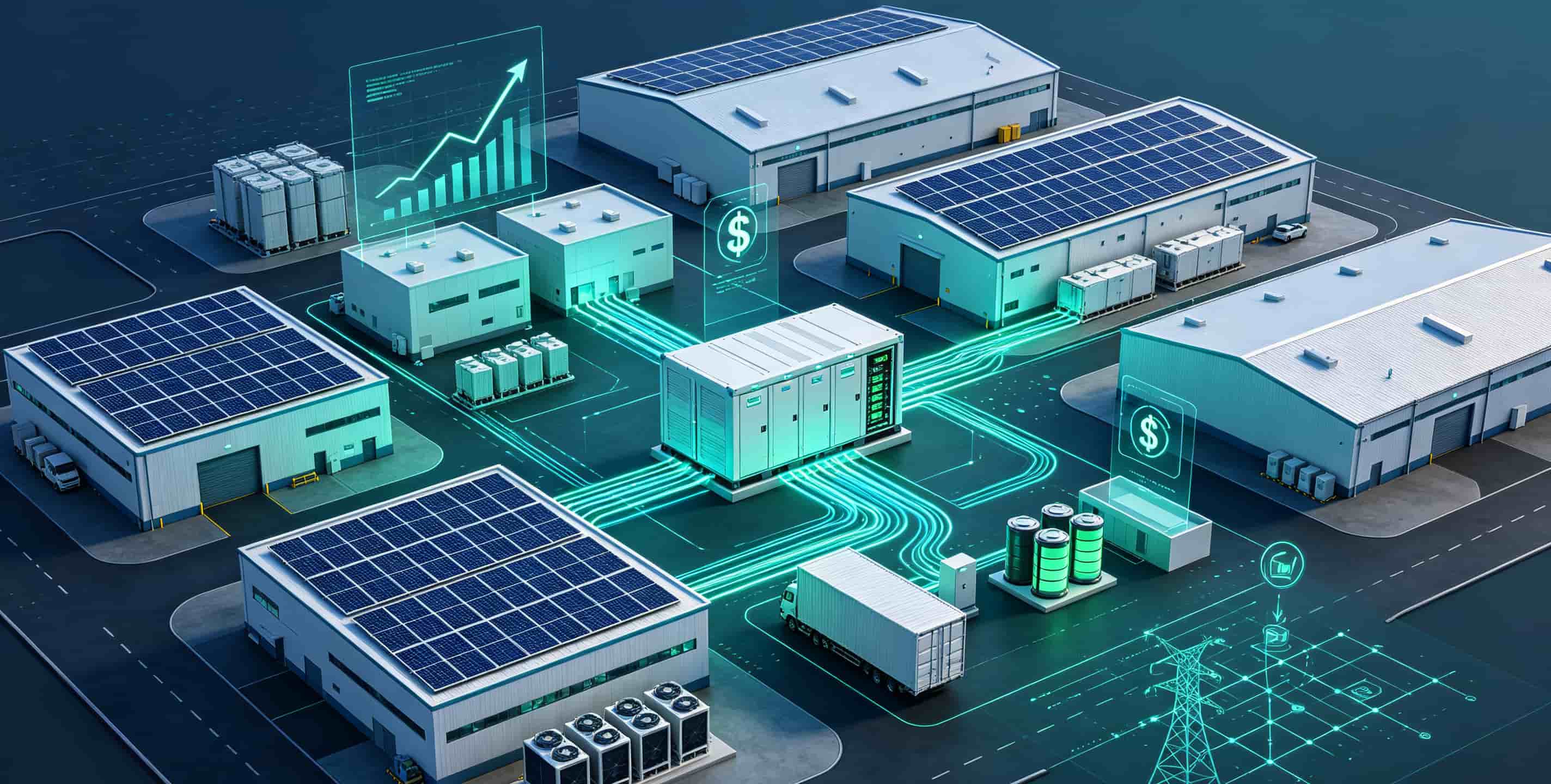
C&I energy storage is no longer a niche auxiliary solution; it has fast become a cost-effective infrastructure upgrade for businesses seeking to slash electricity bills and bolster operational resilience. Beyond its surging deployment speed, the market’s ongoing maturation marks its most transformative trend: fully integrated turnkey systems are now mainstream, supply chains operate with greater dependability, and novel financing structures cut down barriers for new market participants. Combined, these developments support standardized, scalable rollouts of storage systems across entire asset portfolios, instead of only individual business premises.
This article unpacks the latest shifts within the C&I energy storage sector—spanning technology, supply chains and financing models—to help you grasp the market’s forward momentum and its impacts on your corporate energy strategy.
C&I Energy Storage: Market Size & Growth Outlook
Forecast A: Mid-Term Growth Trajectory (2024–2033)
Leading industry research puts the C&I energy storage market at nearly $8.5 billion in 2024, set to surge to roughly $35 billion by 2033, corresponding to a healthy 17.5% compound annual growth rate (CAGR). This strong growth rate illustrates that commercial and industrial enterprises no longer treat C&I storage as an extra accessory; instead, they leverage it as a viable solution to cut power costs and lower operational vulnerabilities stemming from volatile energy supplies.
Forecast B: Long-Range Expansion Forecast (2023–2035)
An alternative conservative forecast values the C&I energy storage market at about $3.18 billion in 2023. It forecasts market revenue to top $10 billion by 2030 and hit an estimated $21.64 billion by 2035. Though its growth curve evolves at a milder pace, the outlook still confirms powerful market momentum. C&I energy storage is scaling rapidly across countless industrial and commercial premises for multiple use cases: peak shaving, tariff cost reduction, emergency power backup, and optimized pairing with rooftop solar systems.
Why C&I Battery Storage Is Experiencing Explosive Growth
1. Renewable Integration: Making On-Site Solar and Wind Viable for Businesses
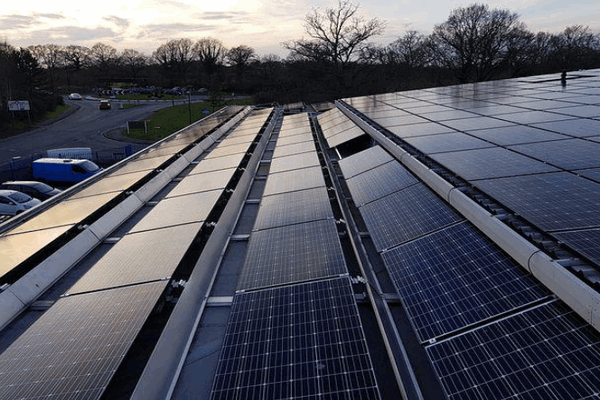
Most commercial facilities face a mismatch between the timing of renewable power generation and peak operational power loads. C&I battery storage solves this imbalance by storing excess solar and wind power for later use. The technology boosts self-consumption rates, eliminates wasted clean energy generation, and unlocks tangible bottom-line benefits for businesses.
2. Peak Shaving & Demand Charge Reduction: Eliminate Sky-High Peak Energy Bills
In nearly all power markets, demand charges triggered by short peak load spikes account for the bulk of industrial electricity costs. Optimized battery discharge during peak hours smooths facility load profiles, reduces punitive demand tariffs, and stops temporary power surges from driving up monthly utility costs drastically.
3. Grid Resilience & Backup Power: Avoid Costly Operational Downtime
Power outages, voltage fluctuations and poor power quality lead to halted production, damaged goods and broken machinery — a critical risk for factories, data centers and cold chain facilities. C&I storage delivers ultra-fast responsive support and long-duration backup power, keeping operations running through grid failures and simplifying facility restart after disruptions.
4. Proactive Policy Support: Incentives That Speed Up Storage Adoption
Supportive regulations act as a powerful market tailwind, especially in China and Europe. Financial incentives, grid stability compliance rules and corporate carbon reduction targets improve project profitability and reduce investment risks, making it far easier for enterprises to approve C&I storage deployments.
5. Falling Battery Prices: Improved ROI and Low-Capital Adoption Options
Falling battery hardware costs and standardized system integration have steadily enhanced the financial returns of C&I storage. Meanwhile, flexible business models such as equipment leasing, shared savings agreements and Energy-as-a-Service lower upfront investment costs, letting businesses deploy storage without massive capital spending.
What Transformations Are Underway in C&I Energy Storage?
The C&I energy storage market is advancing at a fast pace, not only in installed capacity but also in how storage projects are engineered, supplied, funded and put into operation. Higher-efficiency storage units, more stable supply networks, and elastic commercial models make it feasible to standardize and duplicate storage deployments across entire facility portfolios, rather than building every site via fully customized one-time designs.
1. Technology: Smarter, Fully Integrated Turnkey BESS Solutions
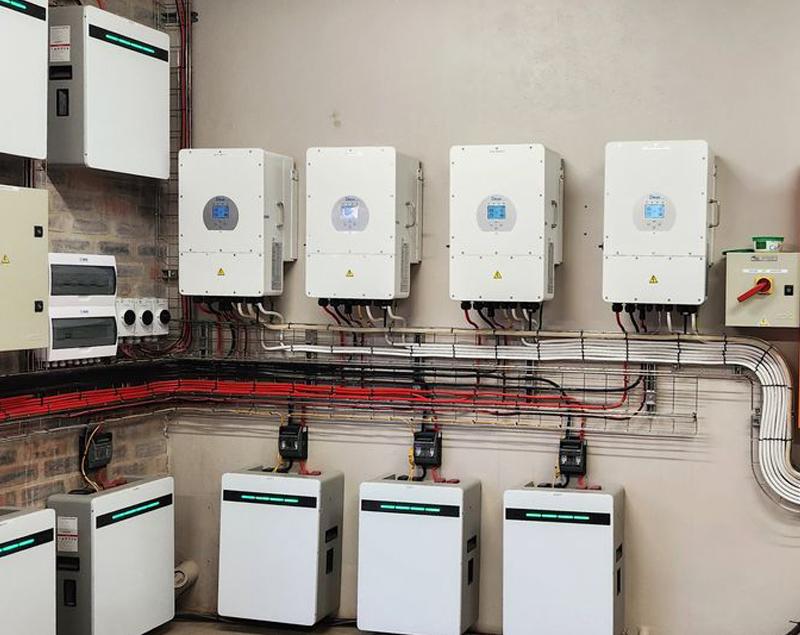
Today’s commercial battery storage systems run more intuitively with stable, consistent performance, thanks to upgraded liquid cooling thermal control and advanced EMS intelligent management software. The industry is widely adopting pre-assembled standardized packaged storage systems, which reduce custom engineering labor, speed up commissioning, and deliver uniform results when rolling out storage across multiple locations.
2. Supply Chain Upgrades: Faster Handover & Dependable Delivery Cycles
Supply chain layouts have been optimized to accommodate compressed project timelines and reliable product shipments. Stakeholders are expanding multi-region sourcing and localized manufacturing, alongside modular equipment designs that simplify on-site assembly and component matching. Developers and integrators focus on clearing supply bottlenecks to cut overall delivery costs, while fully meeting safety and compliance specifications for C&I storage assets.
3. Flexible Financing & Contract Models: Lower Barriers to Storage Adoption
Enterprises now have more procurement choices besides large one-time CAPEX payments. Leasing plans, shared-savings agreements and ESaaS cut initial investment costs, catering to operators who prefer steady, predictable monthly energy fees. Many providers combine storage, rooftop solar and EV charging into a unified bundled solution. This stacked configuration captures multiple economic benefits and streamlines purchasing procedures, treating the whole energy infrastructure as a single integrated upgrade instead of several disconnected standalone projects.