

How Long Can a 10kWh Battery Last During a Power Outage?
Power outages are becoming more frequent in many regions due to extreme weather, aging grid infrastructure, and increasing electricity demand. For homeowners looking for reliable backup power, a 10kWh home battery storage system has become one of the most popular solutions.
However, one common question remains:
How long can a 10kWh battery actually power a home during a blackout?
The answer depends on your energy consumption, inverter efficiency, battery usable capacity, and which appliances you choose to run.A properly configured 10kWh battery can typically provide backup power from several hours to more than one day, depending on the household load.
What Does a 10kWh Battery Mean?
A 10kWh battery stores 10 kilowatt-hours (kWh) of electrical energy, meaning it can theoretically provide:
1kW power output for approximately 10 hours
2kW power output for approximately 5 hours
500W power output for approximately 20 hours
The basic calculation is:
Battery Runtime (hours) = Usable Battery Capacity (kWh) ÷ Average Power Consumption (kW)
For example:
A 10kWh lithium battery with 90% usable capacity provides around 9kWh of available energy.
Actual performance may vary due to inverter losses, battery management systems, temperature conditions, and battery aging.
Real-World Examples: How Long Can a 10kWh Battery Run Your Home?
Scenario 1: Essential Loads Only (18–30+ Hours)
For emergency backup, most homeowners prioritize essential devices:
| Appliance | Average Power | Estimated Runtime |
|---|---|---|
| Refrigerator | 100–200W | 40–80 hours |
| Wi-Fi Router | 10–20W | Several days |
| LED Lighting | 50–100W | More than 50 hours |
| Phone/Laptop Charging | 20–100W | Long duration |
With only essential circuits running, a 10kWh battery can often maintain critical household functions for more than 24 hours.
This configuration is ideal for:
Emergency lighting
Refrigerator protection
Internet connection
Security systems
Communication equipment
Scenario 2: Normal Household Backup (8–12 Hours)
A typical home load may include:
Refrigerator
Lighting
Television
Computers
Small appliances
Average consumption:800W–1200W
Estimated runtime:Approximately 8–12 hours
This means a fully charged 10kWh battery can usually cover an evening blackout and overnight electricity needs without using a generator.
Scenario 3: Whole Home Power With Air Conditioning (2–5 Hours)
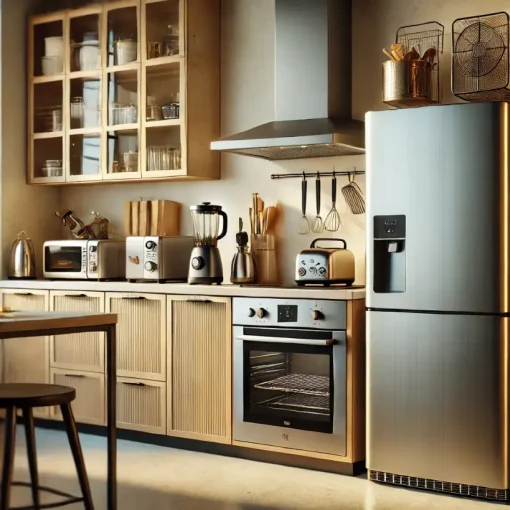
Large appliances consume significantly more energy.
| Appliance | Typical Consumption |
|---|---|
| Air conditioner | 800W–3000W |
| Electric water heater | 3000W+ |
| Electric oven | 2000W–4000W |
If your household load reaches:3000W–5000W
A 10kWh battery may last only:2–5 hours
This is why battery sizing should consider both:
Energy capacity (kWh)
Continuous inverter output power (kW)
A battery may have enough stored energy but still cannot operate multiple high-power appliances simultaneously if the inverter capacity is insufficient.
Is a 10kWh Battery Enough for Your Home?
A 10kWh battery is suitable for:
✅ Small to medium homes
✅ Daily energy storage
✅ Emergency backup
✅ Solar self-consumption optimization
It may not be enough for:
❌ Large homes with multiple air conditioners
❌ Electric heating systems
❌ Full-home backup with heavy appliances
For extended backup, homeowners can combine multiple battery modules to increase storage capacity.