


Understanding the Cost Difference Between Off-Grid and On-Grid Inverters
Solar inverters are a key component of any photovoltaic system. They convert the direct current (DC) generated by solar panels into alternating current (AC) for use in homes and businesses. Although both on-grid and off-grid inverters perform this basic function, their designs, operating roles, and costs can vary significantly. This leads to a common question among solar buyers: why are off-grid inverters generally more expensive than their grid-tied counterparts?
This article examines the main reasons for the cost difference, including system complexity, battery storage requirements, overload capacity, market scale, and installation requirements. Understanding these factors can help you determine which type of inverter is better suited to your energy needs.
Off-Grid Inverter vs. On-Grid Inverter: Structural Complexity
On-Grid Inverter — Simple Two-Stage Design
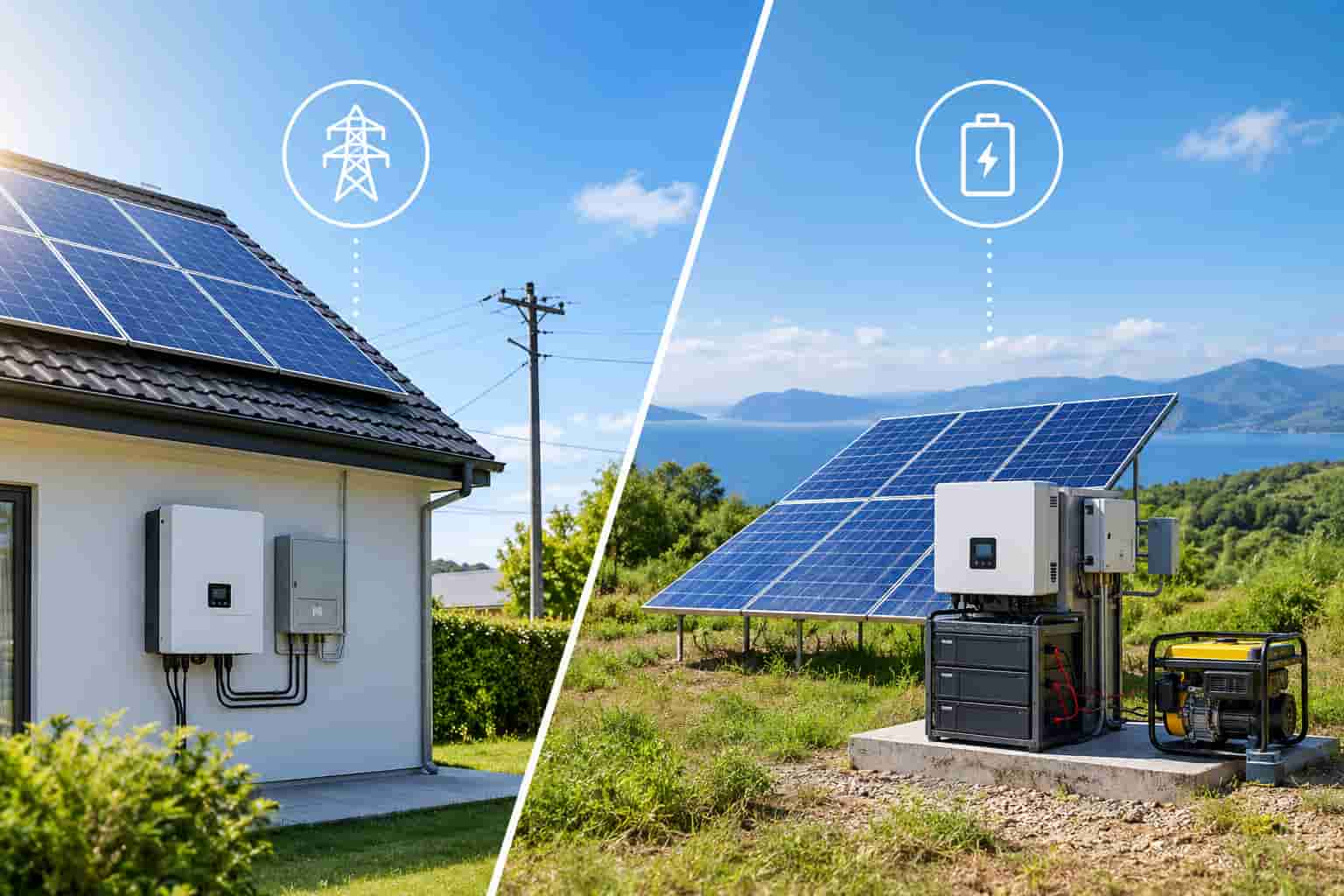
On-grid inverters are designed with simplicity and cost efficiency in mind. They generally use a two-stage conversion process. First, the DC power generated by the solar panels is boosted to the required voltage. It is then converted into grid-compatible AC power.
Because on-grid inverters operate in direct connection with the utility grid, they can rely on the grid to maintain voltage and frequency stability. This reduces the need for complex internal circuitry and allows for a more streamlined design. Their relatively simple structure also supports large-scale manufacturing at lower costs, making on-grid inverters a common choice for residential and commercial solar installations.
Off-Grid Inverter — Advanced Four-Stage Design
Off-grid inverters, by contrast, are designed to operate as independent power sources. Since they cannot rely on the utility grid for stability, they must handle additional functions such as voltage regulation, frequency control, and battery management. To perform these functions, many off-grid inverters use a four-stage design consisting of a controller, boost circuit, inverter stage, and isolation system.
This more complex architecture allows the off-grid solar inverter to safely charge and discharge batteries, manage energy distribution between the battery and connected loads, and maintain stable AC output under changing operating conditions. Because the inverter must handle these stabilization functions internally, it requires more sophisticated electronics, protection mechanisms, and intelligent monitoring systems.
As a result, an off-grid solar inverter operates more like a self-contained power system than a device that works alongside the utility grid. While this independent operation provides reliable power in areas without stable grid access, it also increases the overall complexity and manufacturing cost of the inverter.
Off-Grid Solar Inverters and Battery Storage
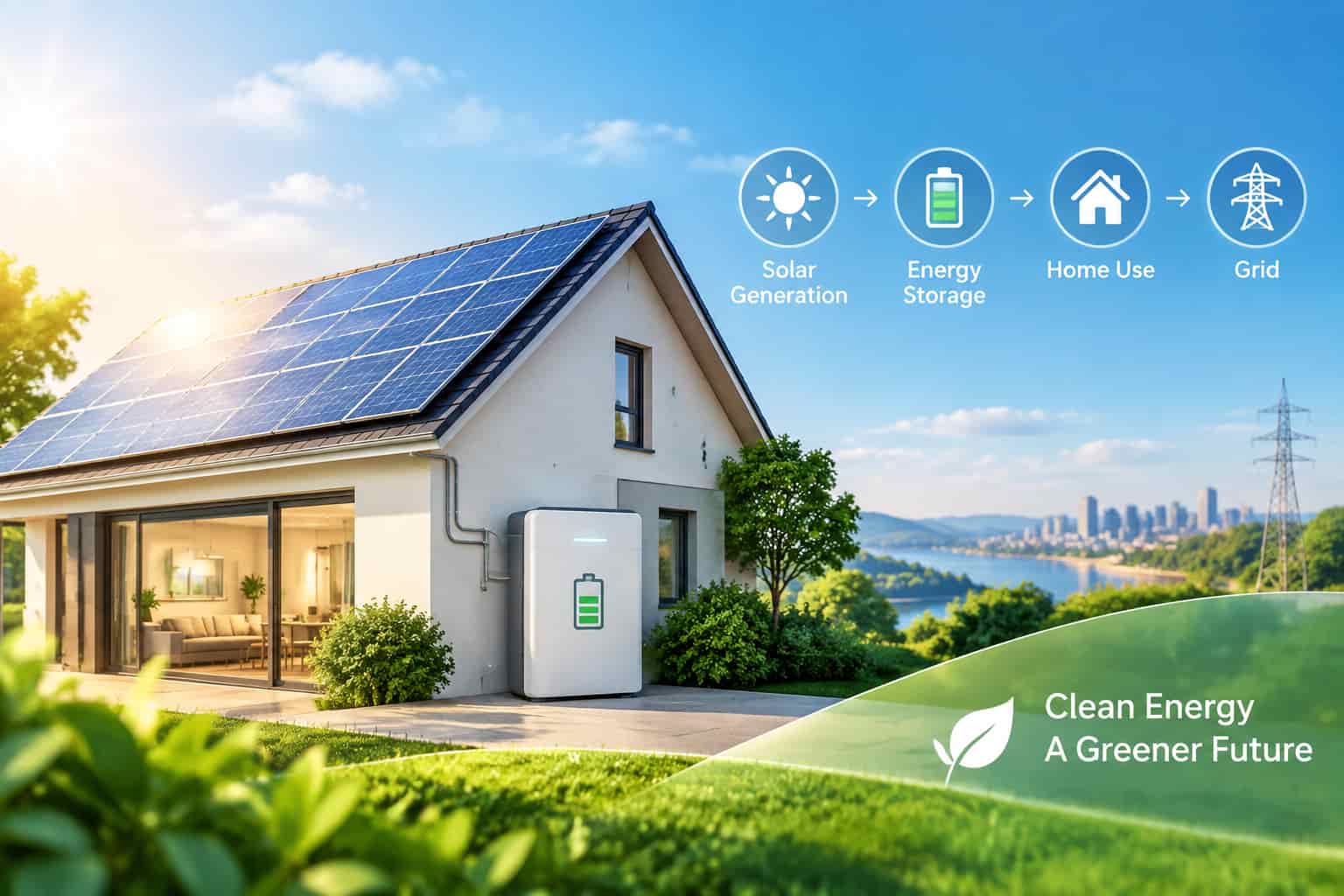
One of the main factors contributing to the higher cost of off-grid power inverters is their reliance on battery storage. Unlike grid-tied systems, which can draw electricity from the utility grid when solar generation is insufficient, off-grid systems have no external power source to rely on. As a result, additional energy must be stored locally, with batteries providing the necessary backup during nighttime, cloudy weather, or periods of power shortage. This makes battery storage an essential part of an off-grid system rather than an optional component.
However, batteries involve more than just the initial purchase cost. They require ongoing monitoring, performance management, and eventual replacement, creating additional expenses over the system's operating life. In comparison, grid-tied systems do not have the same requirements. The utility grid effectively acts as a virtual energy storage system by accepting excess solar electricity and providing power when needed, often through net metering arrangements. This built-in backup mechanism allows grid-connected systems to maintain a simpler configuration while keeping long-term maintenance costs considerably lower.
Off-Grid Inverter Overload Capacity
Another factor contributing to the higher cost of off-grid inverters is their ability to handle startup surges from high-power appliances. Equipment with motors, including refrigerators, pumps, and compressors, can draw two to three times their rated power when starting. If an inverter is unable to handle these temporary power spikes, it may trigger protection mechanisms or potentially damage the connected equipment.
To maintain reliable operation, off-grid inverters are typically built with reinforced circuitry, high-quality components, and effective thermal management systems. These robust designs improve durability and performance but also increase manufacturing costs. In comparison, grid-tied inverters generally experience less of this type of demand because their primary function is to transfer solar power to the utility grid rather than directly supplying household loads with varying power requirements. This more limited role allows manufacturers to use simpler designs and keep costs lower.
Off-Grid Power Inverter Market Volume and Cost
The price gap between off-grid and on-grid inverters is influenced not only by engineering requirements but also by market size. On-grid inverters account for a large share of the global solar market, especially in urban and suburban regions with reliable electricity grids. Strong demand allows manufacturers to produce these inverters on a large scale, spreading research, development, and manufacturing costs across millions of installations and reducing the cost per unit.
Off-grid systems, by comparison, serve a smaller and more specialized market, including remote farms, cabins, islands, and communities with limited or no access to the utility grid. Because overall demand is lower, manufacturers typically operate smaller production runs, which reduces the benefits of economies of scale. As a result, off-grid inverters generally have a higher per-unit cost than comparable grid-tied models.
Off-Grid Inverter Installation and Maintenance
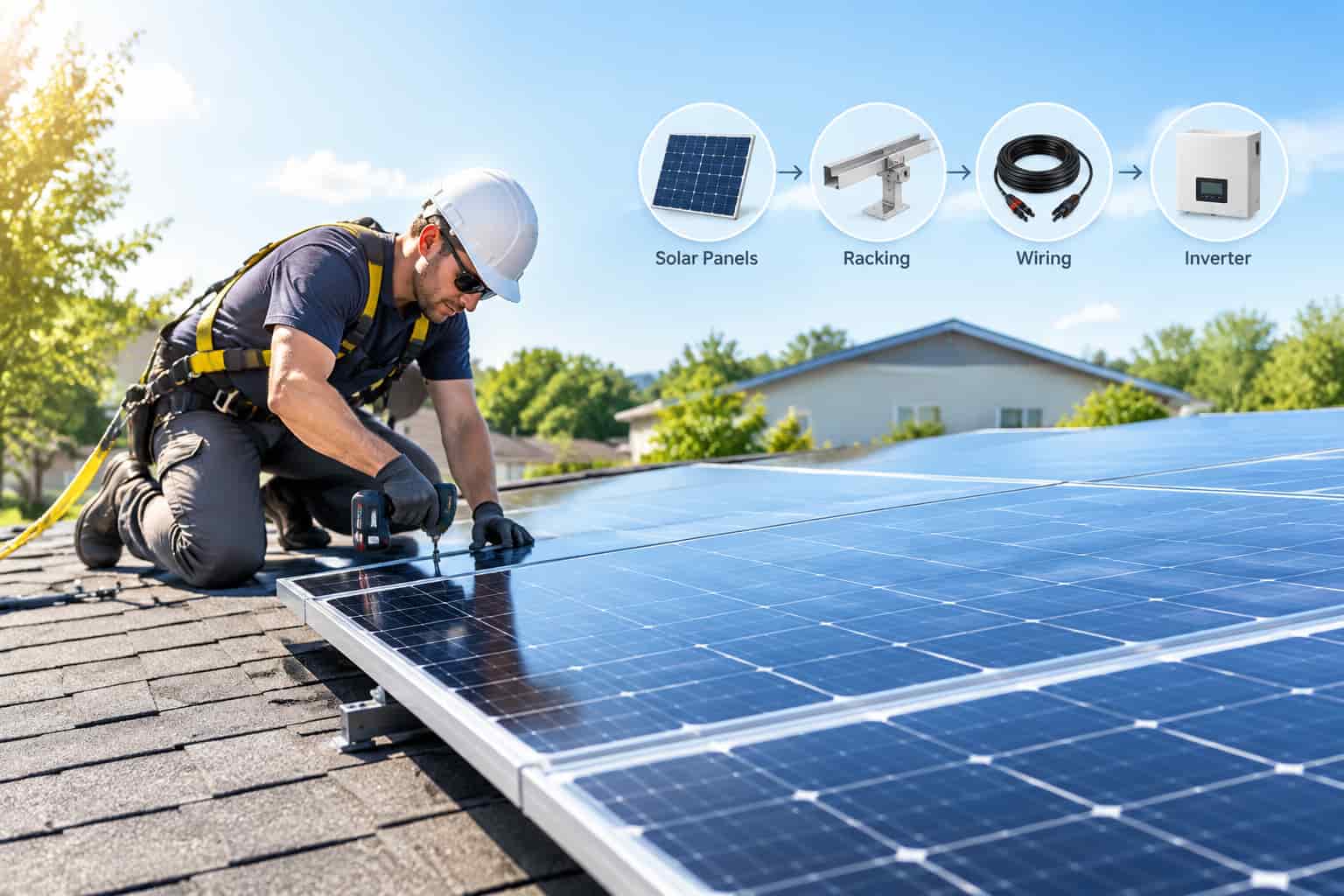
Installing an off-grid system is generally more complicated than installing a grid-tied system. In addition to the off-grid power inverter, the system typically requires battery storage, charge controllers, and, in many cases, a backup generator to improve reliability. These additional components result in longer installation times, higher material expenses, and a greater need for professional technical expertise.
Maintenance also presents an ongoing challenge. Batteries naturally lose performance over time and require regular inspection, balancing, and eventual replacement. These recurring expenses can equal or even exceed the initial investment. By comparison, grid-tied systems are much simpler to install and maintain. With fewer components and less dependence on energy storage, they can provide reliable operation with minimal maintenance and a significantly lower lifetime cost.