How to Choose the Right Solar Inverter?
The solar inverter is the core component of any solar power system. Choosing the right inverter size is essential to ensure optimal energy production, system reliability, and long-term project profitability. An incorrectly sized inverter can reduce system output, increase operational issues, and lead to customer dissatisfaction or unnecessary warranty costs.
In this guide, we’ll explain why proper solar inverter sizing matters and how to select the right inverter for different solar projects. We will cover key factors such as string sizing, inverter manufacturer selection, required sizing data, DC/AC ratio optimization, and the relationship between solar panel capacity and inverter power output.
You’ll also learn what to consider for residential solar installations, when professional engineering support is needed, and how to avoid common inverter sizing mistakes.
Why Is Solar Inverter Size Important?
The inverter plays a critical role in a solar energy system by converting the DC electricity generated by solar panels into usable AC power. Its size and performance directly affect the overall efficiency, energy yield, and return on investment of the system.
Selecting an inverter with the correct capacity helps maximize solar power generation while avoiding unnecessary costs. An undersized or oversized inverter can both negatively impact system performance.
If the inverter capacity is too small compared with the solar panel array, the system may experience power clipping during peak sunlight hours. This occurs when the panels produce more DC power than the inverter can process, causing potential energy losses.
On the other hand, an oversized inverter may operate inefficiently during periods of lower solar generation and increase the initial system cost without providing additional benefits.
Therefore, proper solar inverter sizing is not just a technical requirement—it is a key factor that determines the energy output, reliability, and financial performance of a solar installation.
What Is String Sizing by Manufacturer?
String sizing refers to determining the number of solar panels that can be connected in series within a PV string while keeping the voltage and current within the inverter’s operating limits.
Proper string sizing requires checking three key parameters: the maximum DC input voltage, the MPPT voltage range, and the maximum input current. The string’s open-circuit voltage (Voc) under the lowest expected temperature must stay below the inverter’s maximum voltage limit, while the operating voltage must remain within the inverter’s MPPT range. The string current must also be within the inverter’s allowable input capacity.
Incorrect string sizing can reduce system performance or even damage the inverter in extreme cases. Since each inverter manufacturer has different MPPT voltage ranges and input current limits, PV system designers should always follow the specific inverter manufacturer’s datasheet rather than relying on general inverter specifications.
What Data Is Needed to Size a Solar Inverter?
Accurate solar inverter sizing requires real system data rather than estimates. The main inputs include the solar panel specifications, inverter datasheet, installation environment, and the customer’s electricity consumption.
From the solar panel side, key parameters include the total DC array power (number of panels × rated wattage), maximum power voltage (Vmp), open-circuit voltage (Voc), operating current (Imp), short-circuit current (Isc), and the panel’s temperature coefficient.
The installation site’s minimum and maximum temperatures must also be considered, as cold conditions can increase PV open-circuit voltage by approximately 20–30% compared with standard test conditions (STC).
For the inverter, the most important specifications are the maximum DC input voltage, MPPT voltage range, and maximum input current. Always refer to the manufacturer’s datasheet, as these limits vary between inverter models.
Customer electricity usage is another important factor. Annual consumption should ideally be calculated using 12 months of electricity bills or detailed energy usage records to ensure the system is properly matched to demand.
What Is the Optimal DC/AC Ratio for a Solar System?
The DC/AC ratio is the relationship between the total solar panel DC capacity and the inverter’s rated AC output power. It is one of the most important factors in inverter sizing.
In most applications, the recommended DC/AC ratio is:
Residential solar systems: 1.15–1.25
Commercial solar systems: 1.20–1.30
A slightly oversized solar array is often beneficial because solar panels rarely reach their rated STC output in real-world conditions. Factors such as high temperatures, indirect sunlight, and dust typically reduce actual generation to around 75–85% of the rated capacity.
By installing more DC capacity than inverter AC capacity, the inverter can operate closer to its optimal efficiency range for longer periods, while only limiting occasional peak production. For example, a 6 kW solar array paired with a 5 kW inverter creates a DC/AC ratio of 1.2, which is suitable for many residential installations.
What Is the Right Inverter-to-Solar Panel Power Ratio?
The inverter-to-panel ratio describes how the inverter’s AC output capacity compares with the solar array’s total DC power. Selecting the correct balance helps optimize installation costs, energy production, and long-term system performance.
As a general guideline, the inverter’s AC power is typically around 80–90% of the solar panel array’s DC capacity. An inverter that is too small may cause excessive clipping and energy loss, while an oversized inverter increases costs and may operate inefficiently under low solar conditions.
Therefore, the ideal inverter size should always be determined based on the solar panel capacity, local climate conditions, and the customer’s energy requirements.
What Happens If a Solar Inverter Is Undersized or Oversized?
Choosing the correct inverter size is essential for maximizing solar system performance and return on investment.
An undersized inverter cannot handle the full power output of the solar array during peak production periods, causing clipping. For example, when a 6 kW solar array generates maximum output but is connected to a 4 kW inverter, part of the available energy is lost because the inverter has reached its capacity limit. While a small amount of clipping is normal and acceptable, excessive clipping can significantly reduce energy yield, especially in high-irradiation areas.
An oversized inverter, on the other hand, usually does not create technical issues but may increase system costs and reduce project competitiveness. Since inverters operate most efficiently at around 80–95% of their rated capacity, an oversized unit running at only 40–60% load for most of the day may have lower efficiency and higher unnecessary costs. Larger inverters also consume a small amount of standby power, even when solar generation is unavailable. Oversizing is only recommended when future system expansion is planned, allowing the customer to avoid replacing the inverter when adding more solar panels later.
How to do inverter sizing for single‑family homes?
Sizing residential projects is relatively straightforward in practice, but there are a few factors worth considering. For single-phase homes, inverters are typically selected up to 2.5 kW, as the maximum allowed power for grid-connected inverters on a single phase has been capped at 2.5 kW starting in 2023; for three-phase systems, this can go up to 15 kW, and you should always check your utility provider’s potential feed-in limits.
In practice, a 3.5–4 kW inverter is best suited for an average solar array of about 4 kW, as it operates in its most efficient range with approximately 90% utilization during peak hours. For homes with higher energy consumption—such as those with air conditioning, heat pumps, swimming pools, or electric cars—the 6–10 kW range is more realistic. If the customer also plans to store solar energy, recommend a hybrid inverter that manages both solar production and charging battery—this is also a good upsell opportunity. For partially shaded roofs, an inverter optimizer can be very helpful, as it optimizes output at the panel level before the DC current enters the central string inverter.
How to Choose the Right Solar Inverter Manufacturer?
When evaluating an inverter supplier, consider several key factors. Efficiency is one of the most important indicators, with modern solar inverters typically achieving 96–99% efficiency. Higher efficiency means lower energy losses and better system performance.
Warranty and after-sales support are also critical. Most manufacturers provide 5–12 years of standard warranty coverage, with some offering extensions up to 12–20 years. Reliable technical support and fast replacement services help reduce downtime and customer complaints.
In addition, consider future scalability. If customers may add battery storage in the future, choosing a hybrid inverter with energy storage compatibility can simplify system upgrades and improve long-term value.
Recommended Solar Inverter Manufacturers
MINVIC’s B2B solar inverter portfolio includes proven brands such as Deye and Solis, offering reliable solutions for residential, hybrid, and energy storage applications.
Deye
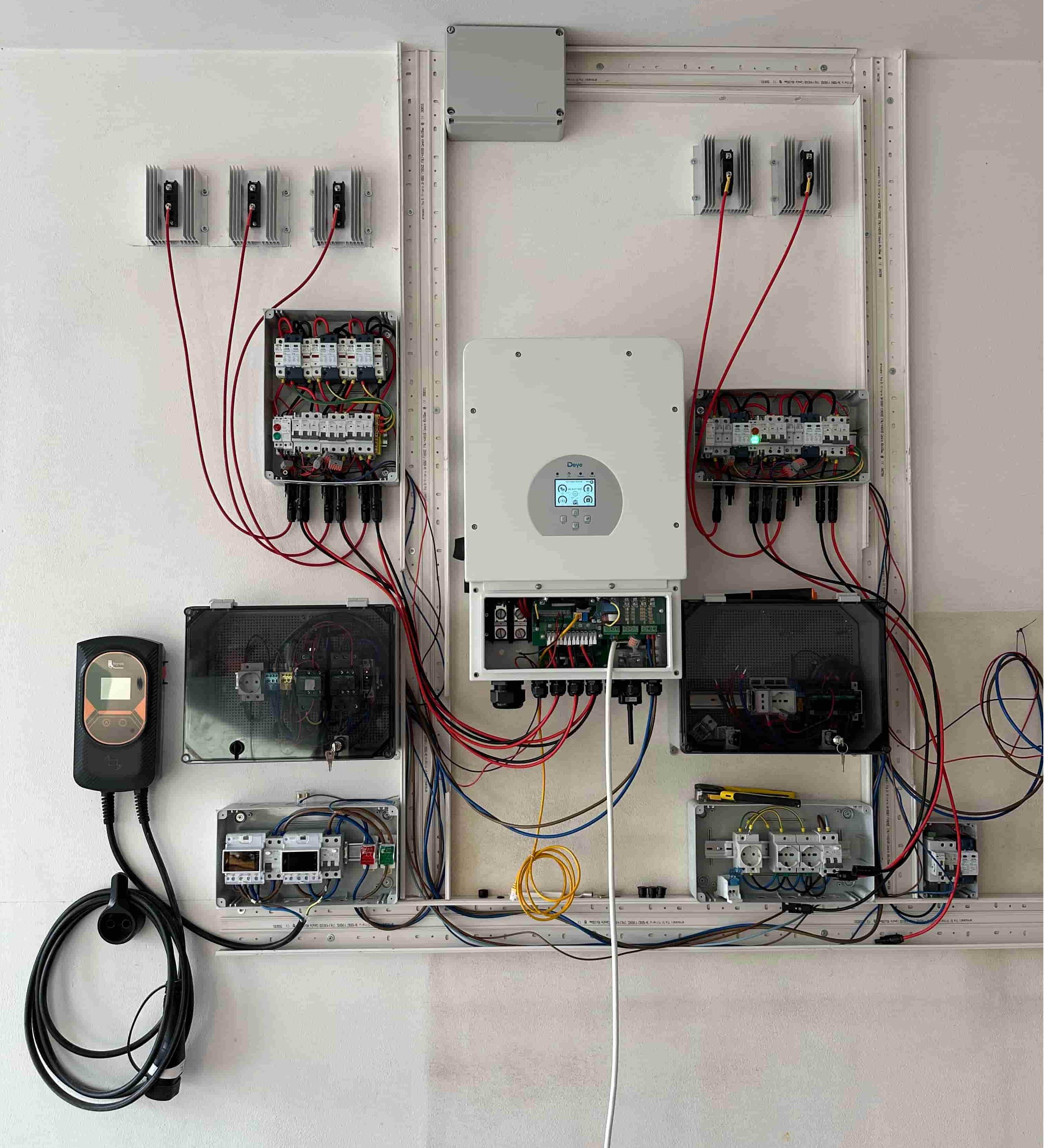
Deye hybrid inverters feature fast 4 ms grid-to-off-grid switching, wide battery compatibility, and AC-coupling support for easy solar system retrofits. With strong parallel expansion capability and cost-effective features, Deye inverters are suitable for residential hybrid and off-grid applications.
Solis
Solis inverters offer high PV oversizing capability and multiple MPPT channels to maximize energy generation from complex rooftop installations. With strong reliability, overload capacity, and generator integration support, they are well suited for homes requiring stable backup power.
As a partner, you can browse the MINVIC inverter lineup and decide which model is the best choice for a given project based on each model’s performance and features.