






Solar Charge Controllers Explained: MPPT vs. PWM
Using the wrong solar charge controller for your battery bank can lead to insufficient charging or overcharging, both of which can be costly. A solar charge controller regulates the voltage and current flowing from solar panels to the battery bank, preventing overcharging and protecting battery life. For most solar systems, an MPPT solar charge controller is the preferred choice because it captures more usable energy from the same solar array.
What Does a Solar Charge Controller Actually Do?
A solar charge controller is installed between the solar panels and the battery bank to regulate voltage and current, ensuring safe charging and preventing overcharging. Without a solar charge controller, uncontrolled panel voltage can damage battery cells and significantly reduce battery life.
Solar panels typically produce a higher voltage than batteries can safely accept, particularly in cold, sunny conditions. For example, a 12V battery bank generally requires around 14.4V for a full charge, while solar panels may deliver much higher voltage. The controller adjusts the incoming power to meet the battery's charging requirements.
Modern solar charge controllers also manage multi-stage charging, including bulk, absorption, and float stages. During bulk charging, maximum current is supplied to charge the battery quickly. In the absorption stage, voltage remains constant while current gradually decreases. Float mode maintains the battery's charge at a low level without overcharging.
This staged charging process is especially important for lithium batteries and other sensitive battery chemistries, which require precise charging parameters. Using a solar charge controller configured for the wrong battery chemistry can significantly shorten battery life, making proper controller selection essential for reliable solar system design.
How Do PWM Charge Controllers Work and When Do They Make Sense?
A PWM (Pulse Width Modulation) solar charge controller connects the solar panels directly to the battery bank and rapidly switches the circuit on and off to regulate charging as the battery fills. This design is simple and reliable, but it forces the solar panels to operate at the battery voltage rather than their optimal voltage.
For example, a typical 12V nominal solar panel may have a maximum power point of around 18V. When connected to a 12V battery through a PWM charge controller, the panel voltage drops to approximately 13V–14V. Although the current remains similar, the lower voltage reduces power output, resulting in lost solar energy.
PWM solar charge controllers are suitable for specific applications:
Small solar systems where the solar panel and battery bank have the same nominal voltage, such as a 12V panel connected to a 12V battery.
Compact applications, such as maintaining an RV or shed battery with a single solar panel.
Low-wattage solar arrays where the energy loss has minimal impact.
However, PWM charge controllers have limitations as solar systems expand. The solar panel voltage must closely match the battery voltage, preventing the use of high-voltage series-connected solar panels. This reduces wiring flexibility and may require thicker, more expensive cables. For systems beyond small-scale battery maintenance, many solar builders eventually outgrow the capabilities of PWM charge controllers.
Why Are MPPT Charge Controllers More Efficient and Worth the Cost?
An MPPT (Maximum Power Point Tracking) solar charge controller uses a DC-to-DC converter to transform excess solar panel voltage into additional charging current, delivering more usable energy to the battery bank than a PWM controller. This higher efficiency makes MPPT the preferred choice for most well-designed solar systems.
For example, a solar array producing 18V at 20A generates 360W of power, while a 12V battery typically requires around 14V for charging. A PWM controller loses the power associated with this voltage difference, whereas an MPPT charge controller converts the excess voltage into additional current, delivering approximately 25A at 14V to the battery bank. This allows the battery to use more of the available solar power.
Under standard operating conditions, MPPT solar charge controllers typically achieve 94%–98% conversion efficiency. Compared with PWM controllers, they can significantly increase energy yield, particularly in cold weather when solar panel voltage rises and in larger solar arrays connected in series.
MPPT charge controllers also offer greater system design flexibility:
High-voltage solar arrays: Panels can be connected in series to create high-voltage strings, reducing cable thickness and transmission losses over longer distances.
Flexible voltage compatibility: A higher-voltage solar array can charge a lower-voltage battery bank, such as a 96V solar array connected to a 48V battery bank, provided the controller supports the required input and output specifications.
Programmable battery charging: Adjustable charging profiles make MPPT controllers suitable for lithium batteries when configured according to the battery manufacturer's specifications.
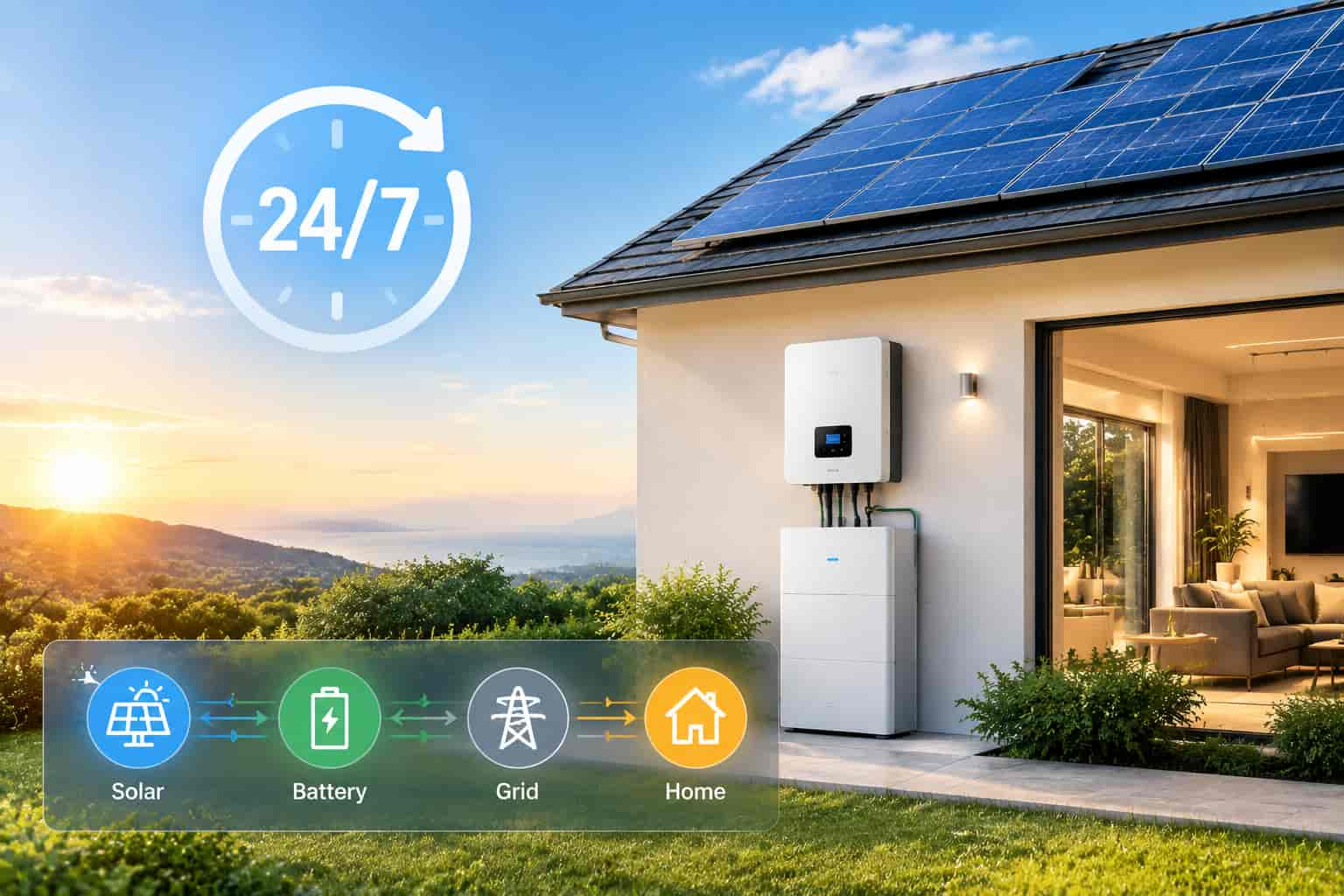
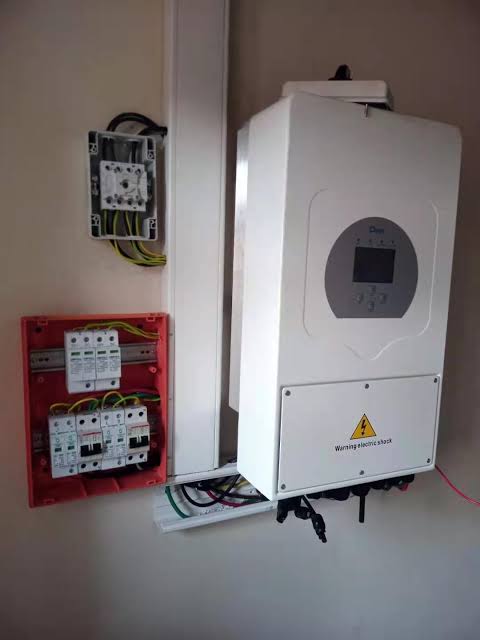
For most large off-grid solar systems, an MPPT charge controller is the preferred option. Alternatively, an all-in-one system can integrate MPPT solar charging into a hybrid inverter or inverter/charger, simplifying system installation and component selection.
MPPT vs. PWM: Which Wins for Your Solar Build?
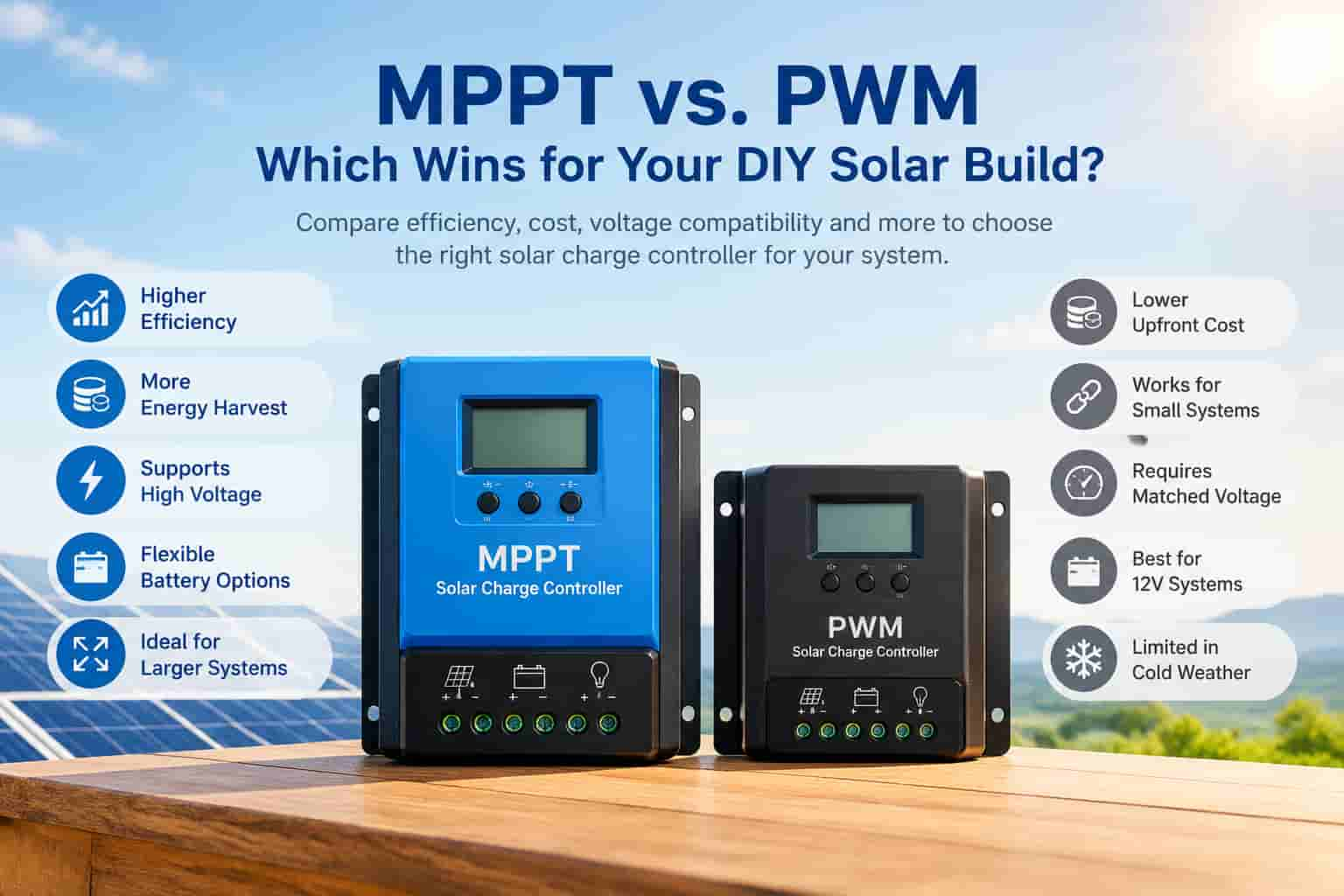
For most solar systems, MPPT charge controllers offer better efficiency and greater flexibility, while PWM controllers are more suitable for small systems with matched panel and battery voltages. Here is a direct comparison of their key differences.
Charging efficiency: MPPT controllers typically achieve 94%–98% conversion efficiency by converting excess panel voltage into additional charging current. PWM controllers operate at battery voltage, losing the potential energy from the voltage difference.
Upfront cost: PWM solar charge controllers are less expensive initially, while MPPT controllers cost more but can recover the price difference through higher energy yields over time.
Solar panel voltage compatibility: MPPT controllers support high-voltage solar panel strings connected in series, whereas PWM controllers require the panel voltage to closely match the battery voltage.
Battery voltage flexibility: MPPT controllers support 12V, 24V, and 48V battery banks, including compatible systems with different array and battery voltages. PWM controllers work best when the panel and battery voltages match.
System size: MPPT controllers are better suited to larger solar arrays, while PWM controllers are ideal for small systems and battery maintenance applications.
Temperature performance: MPPT controllers can utilize the increased panel voltage generated in cold weather. PWM controllers cannot take full advantage of this additional voltage, resulting in lower energy harvest on cold, sunny days.
In summary, MPPT solar charge controllers are the better choice for systems with multiple solar panels, 24V or 48V battery banks, or plans for future expansion. PWM controllers remain a practical, budget-friendly option for small and simple solar installations.