
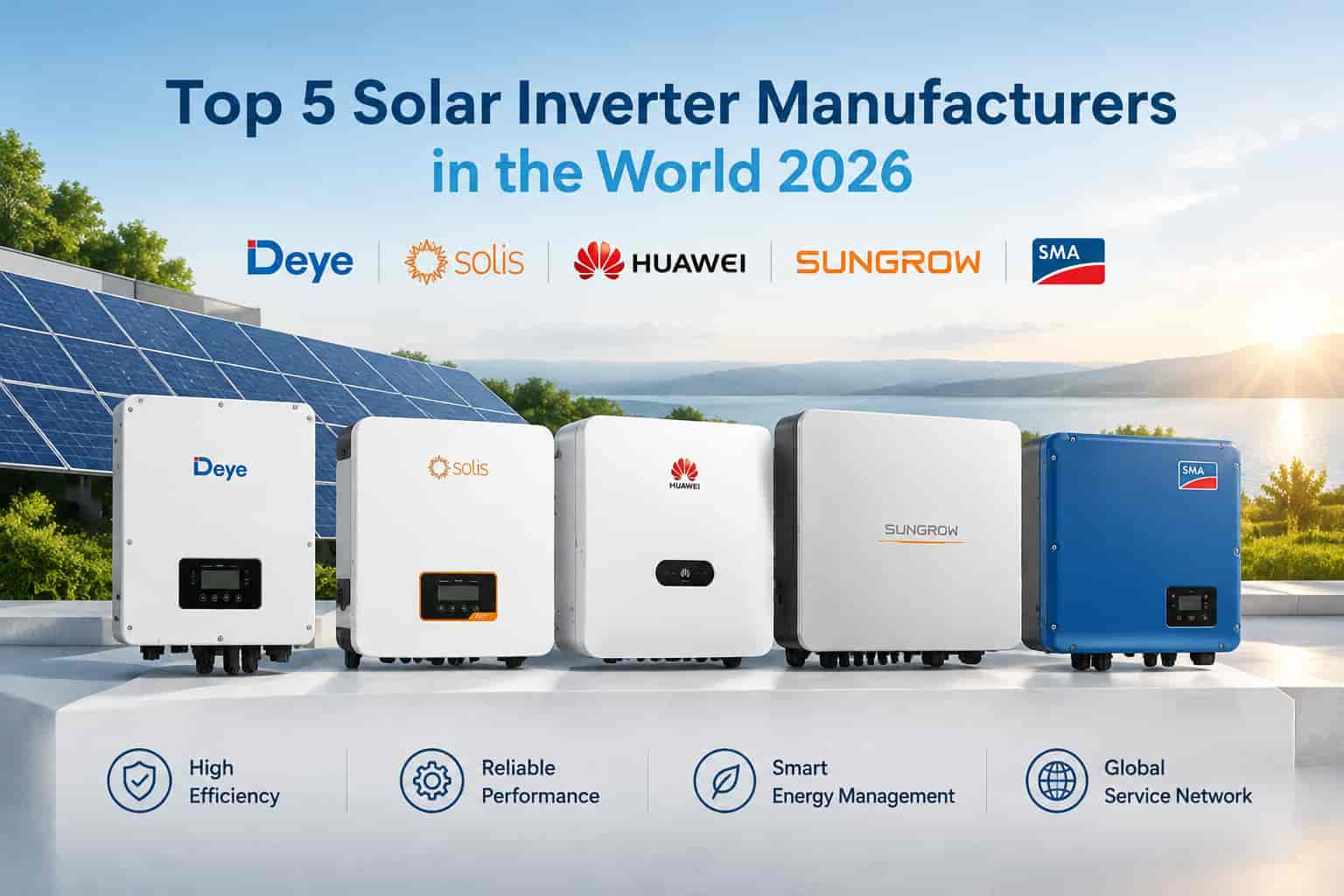
China’s Top Five Energy Storage Battery Manufacturers: BYD, Deye, Dyness, Huawei, and Sungrow
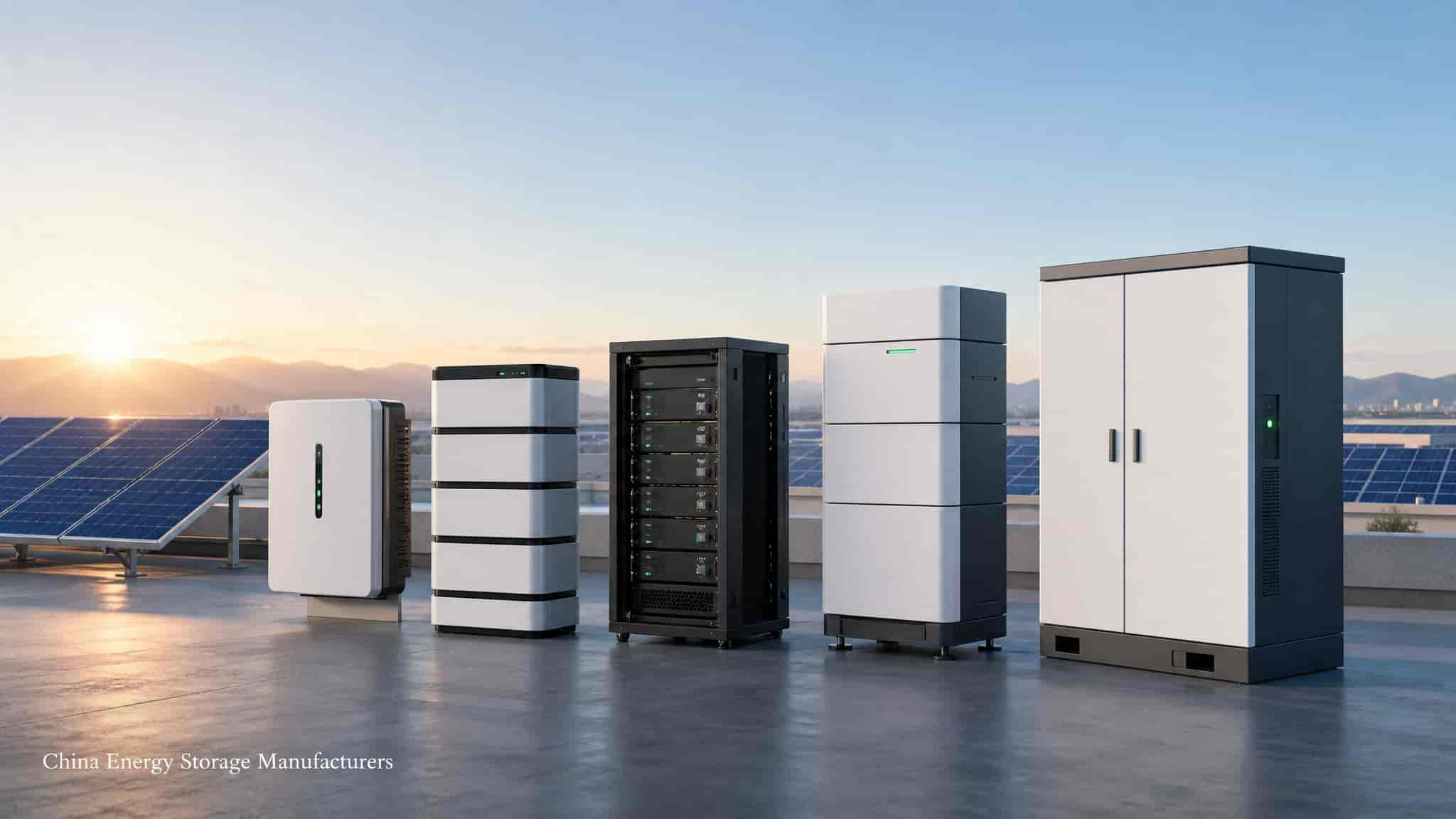
For buyers comparing China's top five energy storage battery manufacturers, BYD, Deye, Dyness, Huawei, and Sungrow are five established names to evaluate. This is not a ranking: each brand serves different solar-storage applications, inverter ecosystems, and channel models. The right choice depends on project size, battery voltage, local certification, inverter compatibility, warranty support, and the service available after delivery.
This guide is designed for global solar installers, EPCs, wholesalers, and distributors. It summarizes each brand’s product focus, representative models, buyer fit, public sales context, and official website. It also explains how MVC Solar supports Deye and Dyness battery sourcing.
Why China Energy Storage Battery Manufacturers Matter to Global Buyers
A capable China energy storage battery manufacturer supplies more than kWh. Buyers need a complete, compatible system: battery modules, BMS, inverter or PCS communication, mounting hardware, documentation, certificates, logistics, and a workable warranty process. A lower purchase price can quickly lose value if the quoted battery does not communicate correctly with the inverter or cannot be serviced in the destination market.
What to Check Before Selecting aLithium Battery Supplier for Solar Storage
Use a short procurement checklist. Confirm the application first: self-consumption, backup power, time-of-use shifting, or commercial demand management. Then confirm the exact inverter or PCS model and request the current approved-compatibility list. A 48 V battery and a high-voltage battery are not interchangeable, even when nominal capacity appears similar.
Ask for the model-specific data sheet, installation manual, warranty terms, transport documents, certificates, required accessories, and parallel-expansion limits. For commercial energy storage, also confirm power rating, discharge duration, safety design, grid requirements, and commissioning responsibility. These checks make supplier comparisons more useful than price-only comparisons.
BYD Energy Storage Battery: Battery-Box Systems for Modular Projects
BYD energy storage battery solutions are best known through the Battery-Box portfolio. BYD’s wider business also includes rechargeable batteries and electric vehicles, so group financial figures should not be treated as battery-storage-only sales. For scale context, public reporting put BYD’s 2025 group revenue at about CNY 804 billion.
BYD is often considered by residential installers and distributors that want modular high-voltage storage within an approved hybrid-inverter ecosystem. Its product logic is straightforward: select the required capacity, match the compatible inverter, and validate market-specific approvals.
Three BYD Battery-Box Models to Compare
Battery-Box Premium HVS: A modular high-voltage option for compact residential systems.
Battery-Box Premium HVM: A higher-capacity modular family for larger homes and selected commercial use.
Battery-Box Premium HVL: A modular format for projects requiring greater storage capacity.
Deye Energy Storage Battery: Solar-Channel Solutions for Home and C&I Use
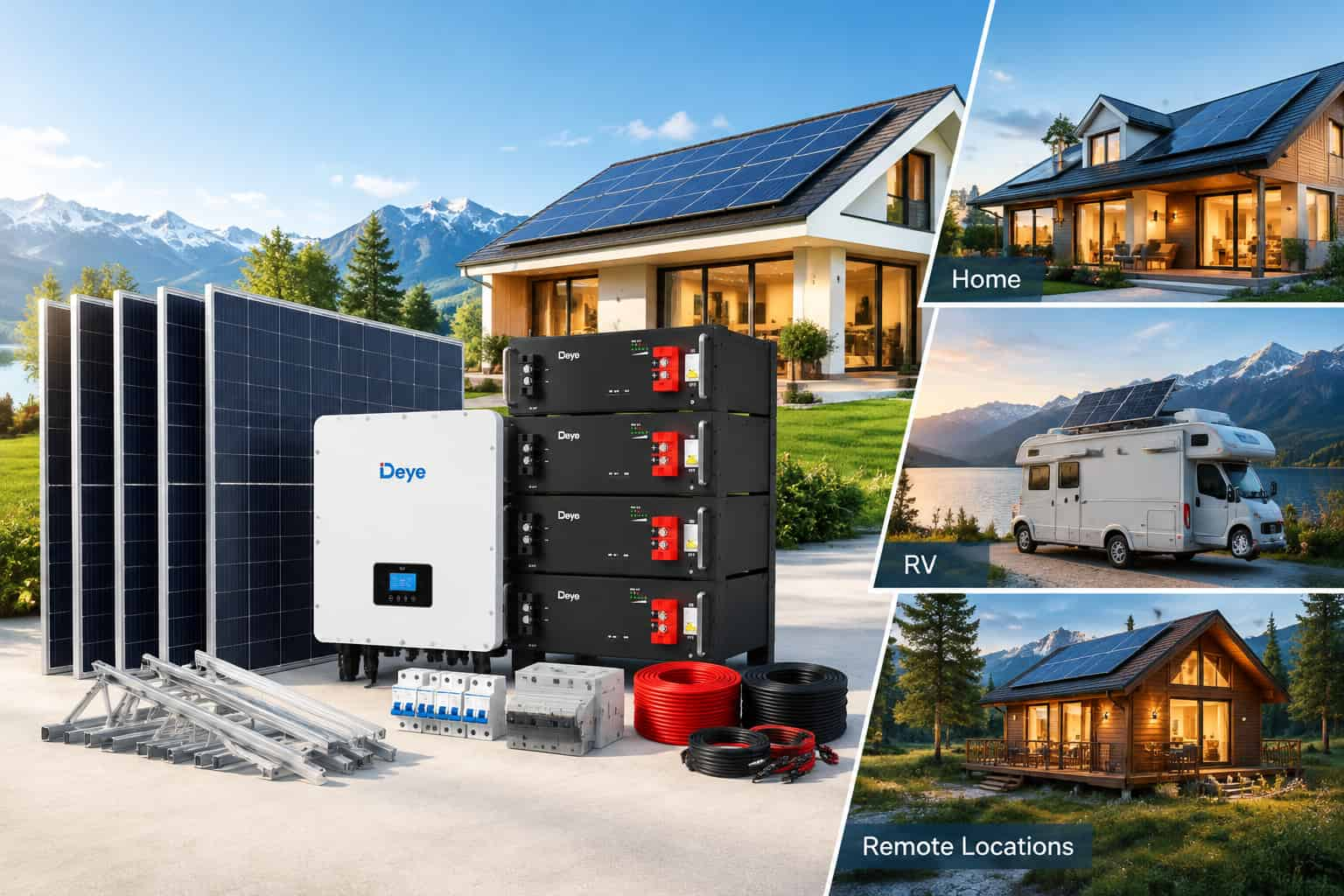
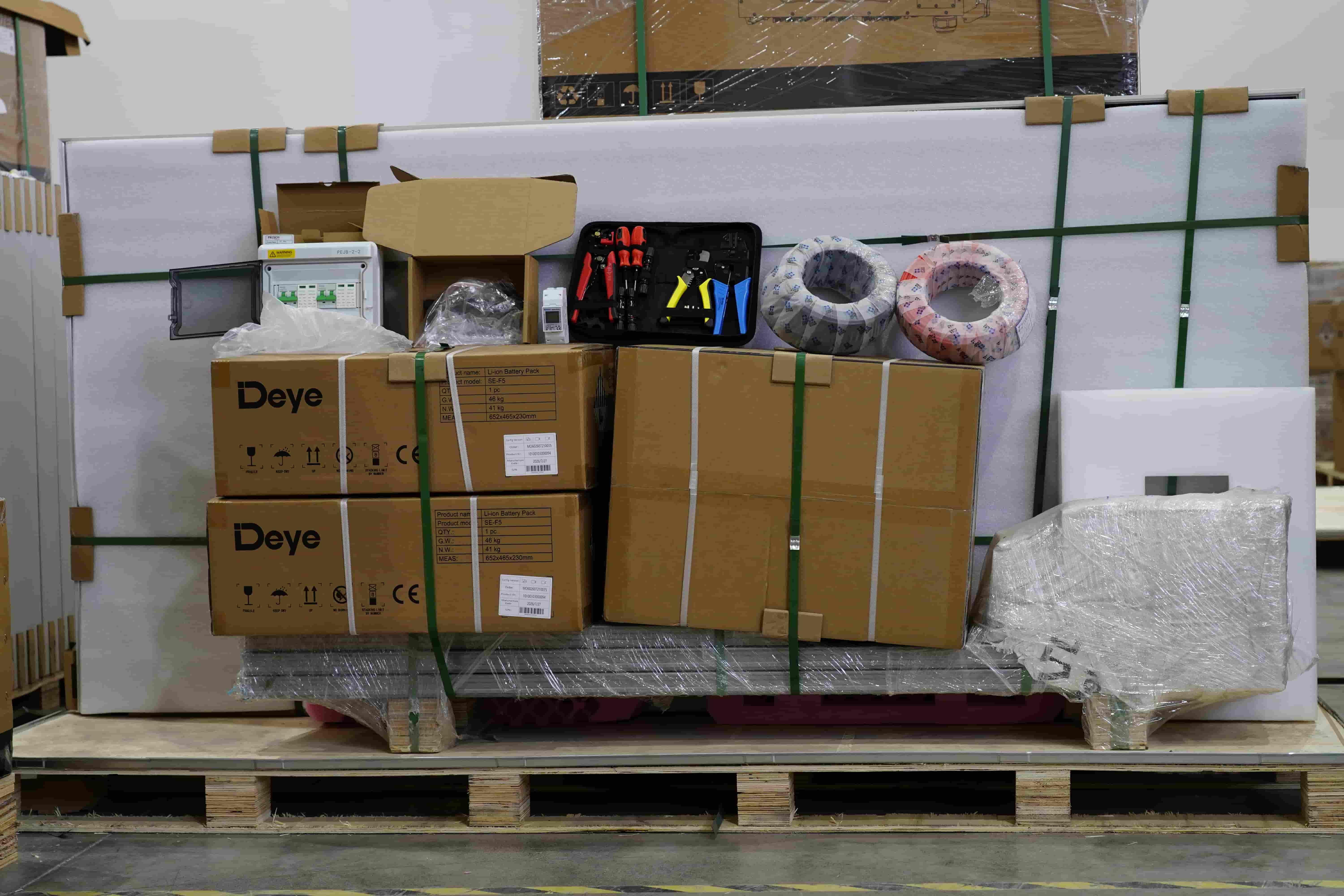
Deye energy storage battery products are relevant for buyers building solar-plus-storage packages around a Deye or approved compatible inverter. Deye’s portfolio spans residential batteries, high-voltage stackable systems, and commercial-and-industrial storage.
Deye is a practical fit for solar distributors, installers, EPC partners, and developers that need recognizable product families across home backup, self-consumption, light-commercial, and C&I applications. The buying decision should focus on the actual system architecture: battery voltage, inverter/PCS pairing, required accessories, and technical support path.
Three Deye Battery Storage Models to Compare
SE-G5.1 Pro-B: A low-voltage, installation-oriented lithium battery for residential energy storage.
GB-L Pro: A high-voltage stackable LFP system, listed by Deye with an 8–24 kWh family capacity range.
BOS-G: A rack-mounted high-voltage battery solution for C&I projects, listed with a 15.36–61.44 kWh range.
Dyness Energy Storage Battery: Modular Lithium Storage for Installers and Distributors
Dyness energy storage battery products focus on stationary energy storage. Dyness states that it specializes in the research, development, production, and sale of energy-storage systems. This specialist positioning can suit battery distributors and solar installers looking for modular lithium products for residential and light-commercial solar applications.
Dyness is commonly evaluated for flexible low-voltage, rack, and wall-mount product formats. Buyers should instead assess its certification coverage, current model availability, inverter protocol support, regional channel coverage, and after-sales process.
Three Dyness Battery Models to Compare
BX51100: A 51.2 V, 100 Ah battery option for compatible residential and small commercial systems.
DL5.0C: A low-voltage LFP battery format for modular solar-storage expansion.
Powerbox Pro: A wall-mount product family for residential storage installations.
Huawei Energy Storage System: Smart PV Ecosystem Integration
A Huawei energy storage system sits within the company’s Smart PV and Digital Power ecosystem. Huawei’s 2025 group revenue was reported at CNY 880.9 billion, but that is group revenue—not an energy-storage sales figure. The more important issue for project buyers is whether the selected LUNA system matches the intended Huawei inverter, monitoring platform, and local support network.
Huawei is a strong option for qualified solar partners seeking an integrated hardware-and-software system rather than a standalone battery. It can fit residential solar projects and commercial solar deployments that value monitoring and a defined ecosystem. Buyers should confirm the regional product version, required control modules, warranty terms, and commissioning process.
Three Huawei LUNA Battery Configurations to Compare
LUNA2000-5-S0: 5 kWh usable-capacity configuration for smaller residential needs.
LUNA2000-10-S0: 10 kWh configuration for households with greater evening demand.
LUNA2000-15-S0: 15 kWh configuration for larger residential energy-storage requirements.
Sungrow Energy Storage System: Home, Commercial, and Project-Scale Options
A Sungrow energy storage system is usually evaluated as part of a broader inverter-and-storage solution. Sungrow reported approximately CNY 77.857 billion in 2024 company revenue; this figure represents the wider business, not battery-only sales. Its value to buyers is the ability to work across residential, C&I, and larger project environments with coordinated inverters, storage, monitoring, and commissioning.
Sungrow can fit residential installers, distributors, EPCs, and project developers, depending on the product family. The key buyer task is matching the system to the site: available space, power requirement, storage duration, interconnection rules, thermal conditions, and O&M responsibility.
Three Sungrow Energy Storage Models to Compare
SBR: A modular high-voltage battery family for residential solar-storage packages.
SBH: A high-voltage battery family for larger residential or light-commercial requirements.
PowerStack: An integrated C&I energy-storage system for project-based applications.
BYD vs. Deye vs. Dyness vs. Huawei vs. Sungrow: Buyer Comparison
The best energy storage battery manufacturer in China depends on the project, not on a universal brand order. The following comparison is a fast way to align brand selection with buyer requirements.
| Brand | Typical buyer | Market focus | Representative models | First item to validate |
|---|---|---|---|---|
| BYD | Residential installers, distributors | Modular Battery-Box storage | HVS, HVM, HVL | Inverter compatibility and approval |
| Deye | Installers, wholesalers, EPCs | Home, light-commercial, C&I | SE-G5.1 Pro-B, GB-L Pro, BOS-G | Battery/inverter or PCS pairing |
| Dyness | Battery distributors, installers | Modular lithium storage | BX51100, DL5.0C, Powerbox Pro | Protocol and expansion limits |
| Huawei | Smart PV channel partners | Integrated Smart String storage | LUNA2000-5/10/15-S0 | Required system components |
| Sungrow | Residential, C&I, project partners | Integrated inverter and ESS systems | SBR, SBH, PowerStack | System design and commissioning |
Why Source Deye and Dyness Batteries Through MVC Solar
MVC Solar states that it distributes Deye products and is the sole distributor for Dyness in China. Where distributor designation is important to a tender, buyer, or local partner, request written confirmation of the relevant territory, product scope, and authorization status. Channel arrangements can vary by market and product line.
For Deye and Dyness battery buyers, MVC Solar’s value is competitive pricing combined with defined pre-sales and after-sales support. A useful scope includes model selection, inverter compatibility review, quotation and lead-time coordination, installation documentation, commissioning support, warranty escalation, and spare-parts planning.