
Solar Quote Checklist: Key Details to Review Before Signing a Home Solar Proposal
Choosing a home solar system involves more than comparing equipment prices and estimated savings. Before committing to a solar panel installation, homeowners should carefully examine whether the proposed system is designed to meet their property's energy requirements and long-term expectations.
A reliable solar quote should provide a clear breakdown of system costs, expected energy production, equipment specifications, and projected electricity savings. More importantly, it should explain how the recommended configuration matches your household's energy consumption, available budget, and future needs.
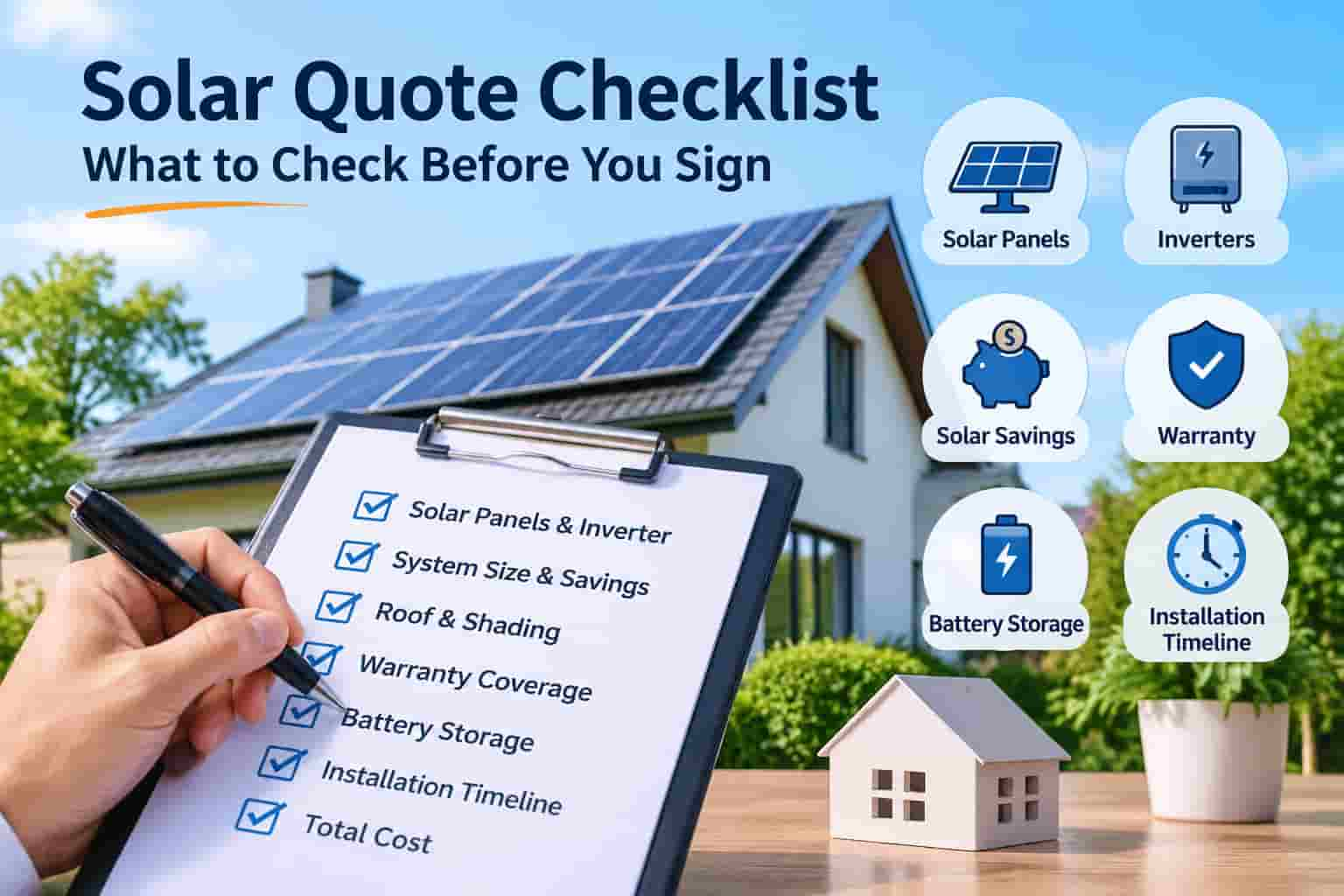
Use the following checklist to evaluate a solar proposal, identify potential issues, and make a more informed comparison between different solar installation offers.
1. Check Whether the Solar System Size Matches Your Actual Electricity Consumption
The appropriate solar system size should be determined by your household's electricity consumption rather than a pre-designed package or the size of your property. Even homes with similar floor areas can have significantly different energy requirements due to local weather conditions, household appliances, insulation quality, electric vehicle usage, and daily living habits.
A professional home solar proposal should include at least 12 months of historical electricity consumption data, measured in kilowatt-hours (kWh). It should also explain the estimated percentage of your household's energy demand that the proposed solar energy system can supply.
Before approving the system design, consider whether your future electricity needs have been taken into account. For example, you may be planning to install or purchase:
An electric vehicle (EV): Regular home charging can substantially increase electricity consumption.
A heat pump or additional air conditioning: Heating and cooling equipment may create higher seasonal energy demands.
A swimming pool pump or hot tub: These appliances can add considerable ongoing electricity usage.
A home office or property expansion: Changes in household size, working arrangements, or living space may increase energy requirements.
A battery energy storage system: If you intend to add battery storage in the future, the initial solar system design should consider compatibility and expansion options.
Relying exclusively on previous electricity bills may result in an undersized solar installation if your household's energy consumption is expected to grow. Discussing these potential changes with your solar installer before signing can help ensure the proposed system delivers sufficient energy capacity both now and in the coming years.
2. Check the Roof Layout and Shading Analysis
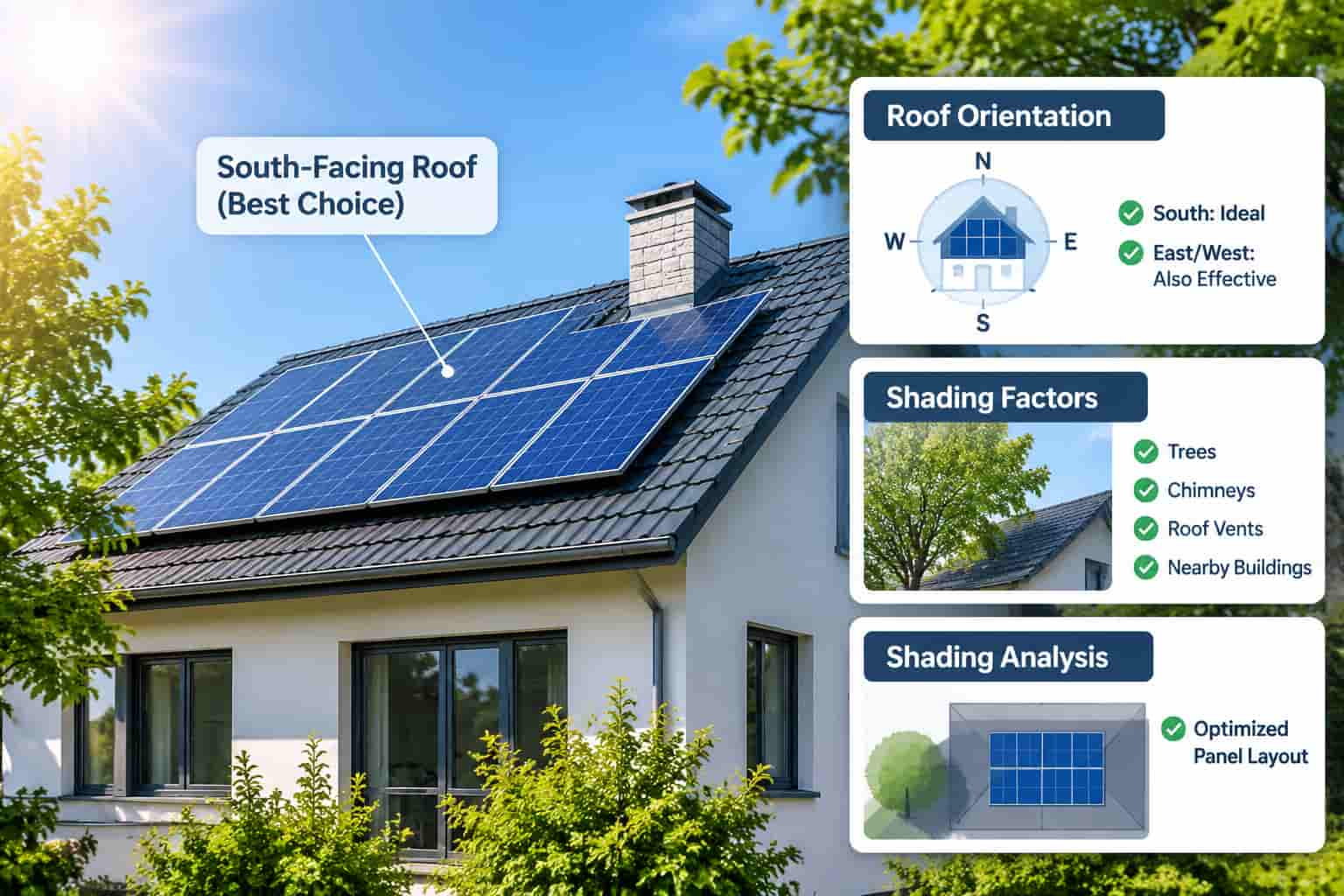
A professional solar proposal should include a roof layout showing where solar panels will be installed and why those areas are suitable. In the Northern Hemisphere, south-facing roofs generally offer better sunlight exposure, while east- and west-facing sections can also be practical depending on electricity rates and household energy usage.
Shading from trees, chimneys, roof vents, and nearby buildings can significantly affect solar energy production. The proposal should explain how shading is assessed, whether through an on-site inspection or satellite-based modeling, and how the panel layout minimizes potential losses.
If roof orientation and shading are not properly evaluated, the estimated solar system output may be higher than its actual performance.
3. Solar Panels: Brand, Power Output and Warranty
A reliable solar quote should specify the solar panel manufacturer and exact model instead of using general descriptions such as "premium panels." Before choosing, review these key specifications:
Rated Power and Efficiency: Check the panel's wattage and conversion efficiency.
Warranty Coverage: Review the product warranty and linear power performance warranty.
Annual Degradation: Check the expected yearly decline in power output.
Panel Design: Consider appearance options, including all-black solar modules.
Inverter Compatibility: Ensure the panels work properly with the selected inverter.
4. Solar Inverters: String Inverters, Power Optimizers or Microinverters
A solar inverter converts the direct current (DC) generated by solar panels into alternating current (AC) for household use. Since inverter replacement may be necessary during the solar system's operating life, its design, reliability, warranty, and maintenance costs deserve careful consideration.
| Inverter Type | Working Principle | Main Advantages | Key Considerations |
|---|---|---|---|
| String Inverter | Connects multiple panels to one central inverter | Lower cost and simple installation | Shading on one panel may affect the entire string |
| String Inverter with Optimizers | Uses module-level optimizers with a central inverter | Improved shade management and panel-level monitoring | Additional components increase system complexity |
| Microinverters | Each panel has its own inverter; some units support multiple panels | Independent panel performance and flexible system design | Higher upfront cost per watt and more individual units to maintain |
5. Solar Savings: Understand the Calculation Behind the Estimates
Projected savings should be supported by clear calculations rather than attractive figures alone. Before accepting a solar proposal, review the assumptions used to estimate your financial returns:
Electricity Rates: Check current utility prices and the projected annual rate increases.
Energy Production: Review estimated first-year solar output (kWh) and annual panel degradation.
Government Incentives: Confirm which tax credits or rebates are included and whether you meet the eligibility requirements.
Net Metering Policies: Understand how your utility compensates you for excess electricity sent back to the grid.
Total Cost and Payback Period:Compare the final system price after applicable incentives with the estimated time needed to recover your investment.
6. Review Solar Financing Options and Total Costs
A low monthly payment does not necessarily mean an affordable solar installation. For solar loans, examine the interest rate, repayment period, additional fees, and potential consequences if you sell your property.
If you choose a solar lease or power purchase agreement (PPA), pay attention to annual payment increases (escalators), early buyout conditions, and any property liens or financing-related filings.
7. Confirm the Complete Solar Installation Timeline
The project schedule should cover every major stage, not just the physical installation. A typical residential solar project includes site assessment, system design, permit approval, equipment installation, final inspection, and utility permission to operate (PTO).
Ask your installer to provide an estimated completion date for each stage. Even after the solar panels are installed, the system may remain inactive until the utility grants permission to operate. Understanding the full timeline helps you set realistic expectations for when your solar energy system will begin generating electricity and reducing utility bills.
8. Understand the Different Types of Solar Warranty Coverage
A solar installation may include several warranties provided by different manufacturers and contractors. Instead of relying on a general "25-year warranty" statement, check exactly what each agreement covers.
Product Warranty: Protects solar panels and inverters against manufacturing defects and equipment failures
Performance Warranty: Guarantees a minimum level of solar panel power output over a specified period.
Workmanship Warranty: Covers installation-related problems, including roof penetrations, mounting structures, and electrical wiring.
Roof Warranty: Provides protection against potential roof damage caused by the installation process.
Before signing, confirm which company is responsible for each warranty claim and whether coverage remains valid if the original installer closes its business.
9. Evaluate Whether Battery Storage Meets Your Needs
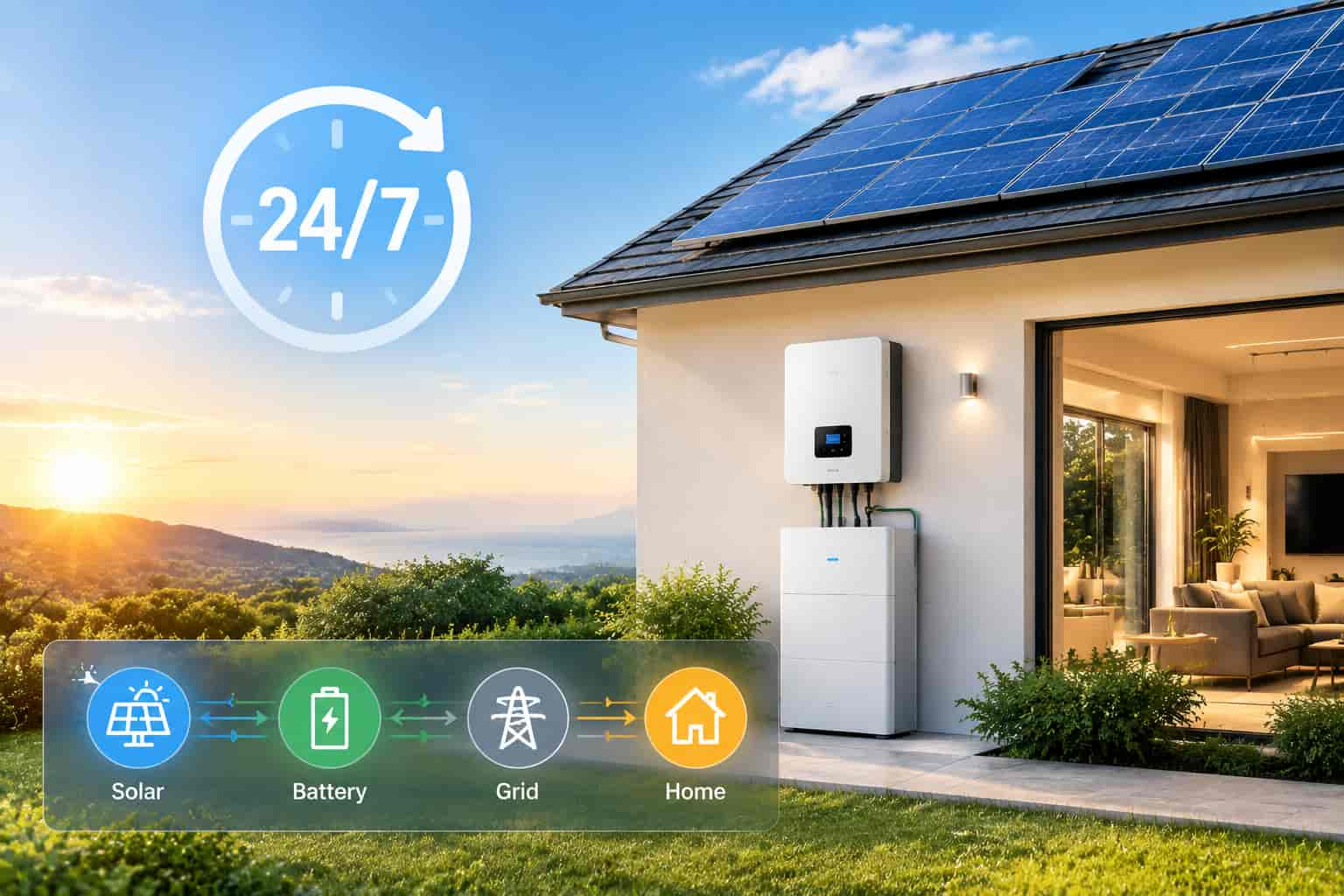
A solar battery allows homeowners to store excess electricity for later use, improve solar self-consumption, and access backup power during outages. However, adding battery storage increases the overall system investment.
If a The proposal includes a battery, it should explain which household appliances can receive backup power, the expected backup duration, and how the system operates during a grid outage.
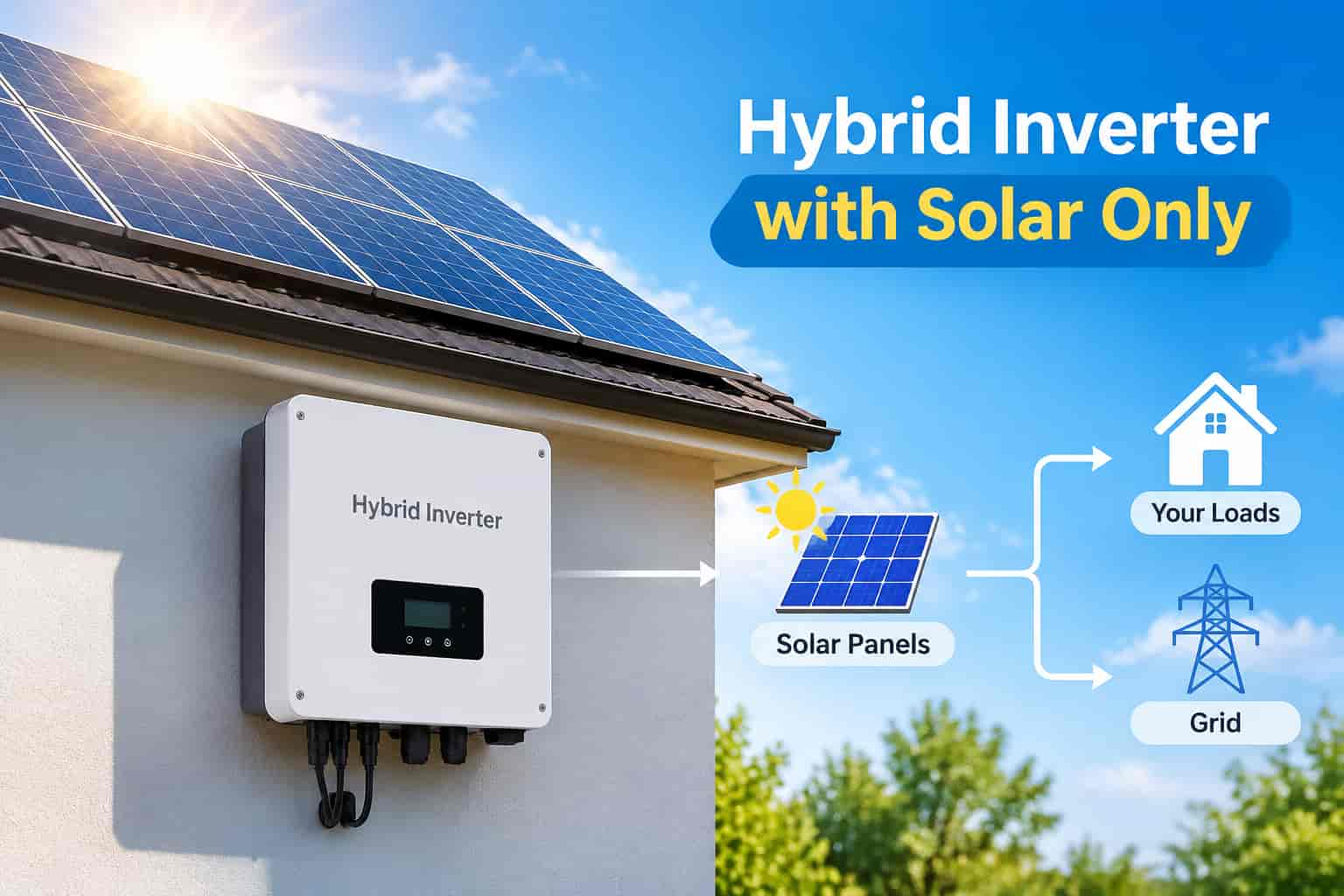
Keep in mind that standard grid-tied solar systems generally shut down during power failures for safety protection. Backup functionality typically requires a compatible hybrid inverter or backup-capable inverter, together with an appropriately configured battery storage system.
10.Solar Quote Checklist: 10 Essential Points Before Signing
Before choosing a solar installer, make sure the proposal clearly addresses these ten areas:
At least 12 months of historical household electricity consumption.
Proposed solar system capacity (kW) and estimated annual energy generation (kWh).
Specific solar panel and inverter brands and model numbers.
Roof design, panel orientation, and shading assessment.
Complete installation price, cost per watt, and applicable incentives.
Financing conditions and the total cost throughout the contract period.
Individual warranty coverage and the responsible service providers.
Project schedule covering permits, installation, inspection, and utility approval.
Solar monitoring capabilities and procedures for handling unexpected production losses.
Battery capacity, backup loads, and estimated backup duration, if energy storage is included.