

How Many Solar Panels Do You Need to Charge an EV?
As electric vehicles (EVs) become more popular, more homeowners want to lower charging costs. They also want to make daily driving more sustainable. Combining solar panels with an EV charging system is one practical solution. But how many solar panels do you actually need to charge an electric car?
The answer depends on several factors. These include your vehicle's energy use, yearly driving distance, solar panel wattage, and local sunlight.
In this guide, we explain how to estimate the solar panels needed to charge an EV. We also compare different EV models. We explore how a home solar system can make EV charging easier and more cost-effective.
1. How Much Electricity Does an Electric Vehicle Need?
Before calculating the number of solar panels, you first need to understand how much electricity your EV consumes.
The average American driver travels approximately 13,700 miles per year. Using an average EV energy use of about 27 kWh per 100 miles.
You can estimate your yearly electricity use like this.
Annual EV Electricity Consumption = Annual Mileage × Energy Consumption per Mile
For example:
13,700 miles × 0.27 kWh/mile = 3,699 kWh per year.
This means an average electric vehicle may require approximately 3,700 kWh of electricity annually for driving.
However, actual consumption varies depending on the vehicle model, driving habits, weather conditions, road conditions, and vehicle efficiency. Larger electric SUVs and pickup trucks generally consume more energy than smaller, more efficient EVs.
Understanding your vehicle's annual electricity consumption is the first step toward designing the right solar charging system.
2. How many solar panels do you need to charge an EV?
Once you know your EV's annual electricity consumption, you can estimate how many solar panels you need.
The calculation depends on three key factors:
Annual EV electricity consumption: How much electricity your vehicle needs each year.
Solar production ratio: How much electricity a solar system can generate in your location.
Solar panel wattage: The rated power output of each solar panel.
A simplified calculation is:
Number of Solar Panels = Annual EV Electricity Consumption ÷ Annual Energy Production per Panel
Solar energy production varies by location. For example, Massachusetts has an illustrative solar production ratio of 1.1, while California has a ratio of 1.5.
With 450W solar panels, locations with stronger solar resources can generally generate the same amount of electricity with fewer panels.
Solar Panel Requirements for Different EV Models
The following examples illustrate the estimated number of 450W solar panels required for different EV models in two locations:
| EV Brand | Model | Massachusetts (1.1 ratio) | California (1.5 ratio) |
|---|---|---|---|
| Rivian | R1S Standard | 11 | 8 |
| Tesla | Model X | 9 | 7 |
| Ford | F-150 Lightning XLT | 14 | 10 |
| Audi | Q4 55 e-tron quattro | 10 | 7 |
| Hyundai | Ioniq 6 Standard | 7 | 6 |
| Tesla | Model Y Performance | 9 | 7 |
Note: These are illustrative estimates. Actual requirements depend on local solar conditions, equipment performance, and vehicle usage.
3. What Factors Affect the Number of Solar Panels You Need?
Vehicle consumption alone does not determine the number of solar panels required for EV charging. Several other factors can influence the final system size.
3.1 Your Location and Sunlight Availability
Solar energy production varies significantly depending on geographical location and climate.
For example, California generally receives more sunshine than Massachusetts, allowing solar panels to generate more electricity throughout the year.
Other factors include:
Average daily sunlight hours
Seasonal weather changes
Roof orientation and installation angle
Shading from nearby buildings and trees
Local temperature and environmental conditions
Before installing a solar system, evaluate your property's solar potential. Do not rely on a standard panel count.
3.2 Solar Panel Wattage and Efficiency
Solar panel wattage directly affects how many panels you need.
For example, a 450W solar panel has a higher rated power output than a 400W panel. Therefore, you may need fewer 450W panels to achieve the same installed capacity.
Higher-efficiency solar panels can make better use of limited roof space. This is especially important for homeowners with smaller rooftops.
When selecting solar panels, consider rated power, conversion efficiency, product quality, and long-term performance.
3.3 Your Household Electricity Consumption
Your EV is unlikely to be the only major electricity consumer in your home.
Air conditioning, refrigerators, lighting, washing machines, and other household appliances also contribute to overall energy demand.
To power your home and electric vehicle with your solar system, calculate your total electricity use. Do not size the system for EV charging alone.
Also consider future energy needs, such as purchasing another electric vehicle or adding more household appliances.
4. Can You Charge an EV Directly with Solar Panels?
Yes. A properly configured solar energy system can supply electricity to a home EV charger.
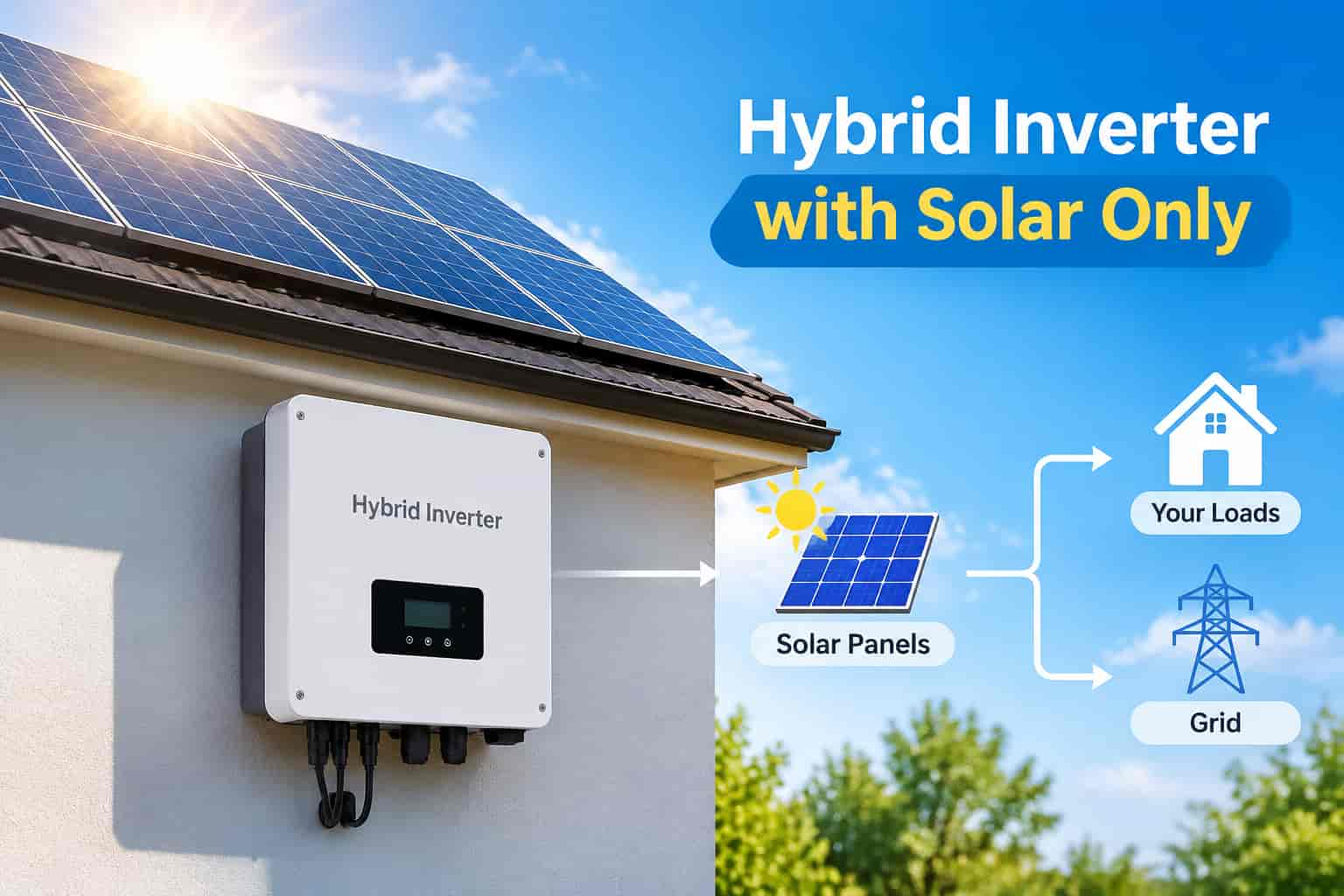
During daylight hours, solar panels generate DC electricity. A solar inverter converts this electricity into AC power for household use and compatible EV charging equipment.
When you park your vehicle at home during the day, you can schedule charging to make better use of available solar power.
However, charging patterns can create a challenge.
Approximately 56% of drivers charge their EVs overnight, often between 10 p.m. and 6 a.m. Unfortunately, solar panels do not generate electricity at night.
This is where a home battery storage system becomes particularly useful.
5. Why Combine Solar Panels with a Home Battery for EV Charging?
A solar battery stores excess electricity generated during the day so it can be used later.
Instead of sending all extra solar power to the grid, homeowners can store some energy. They can use it to charge their EVs in the evening or overnight.
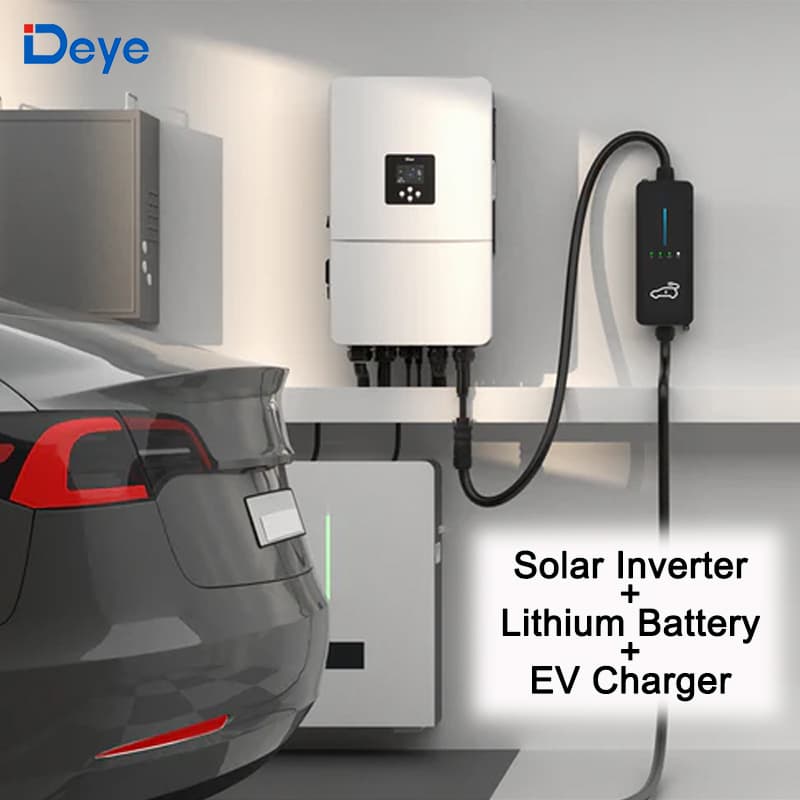
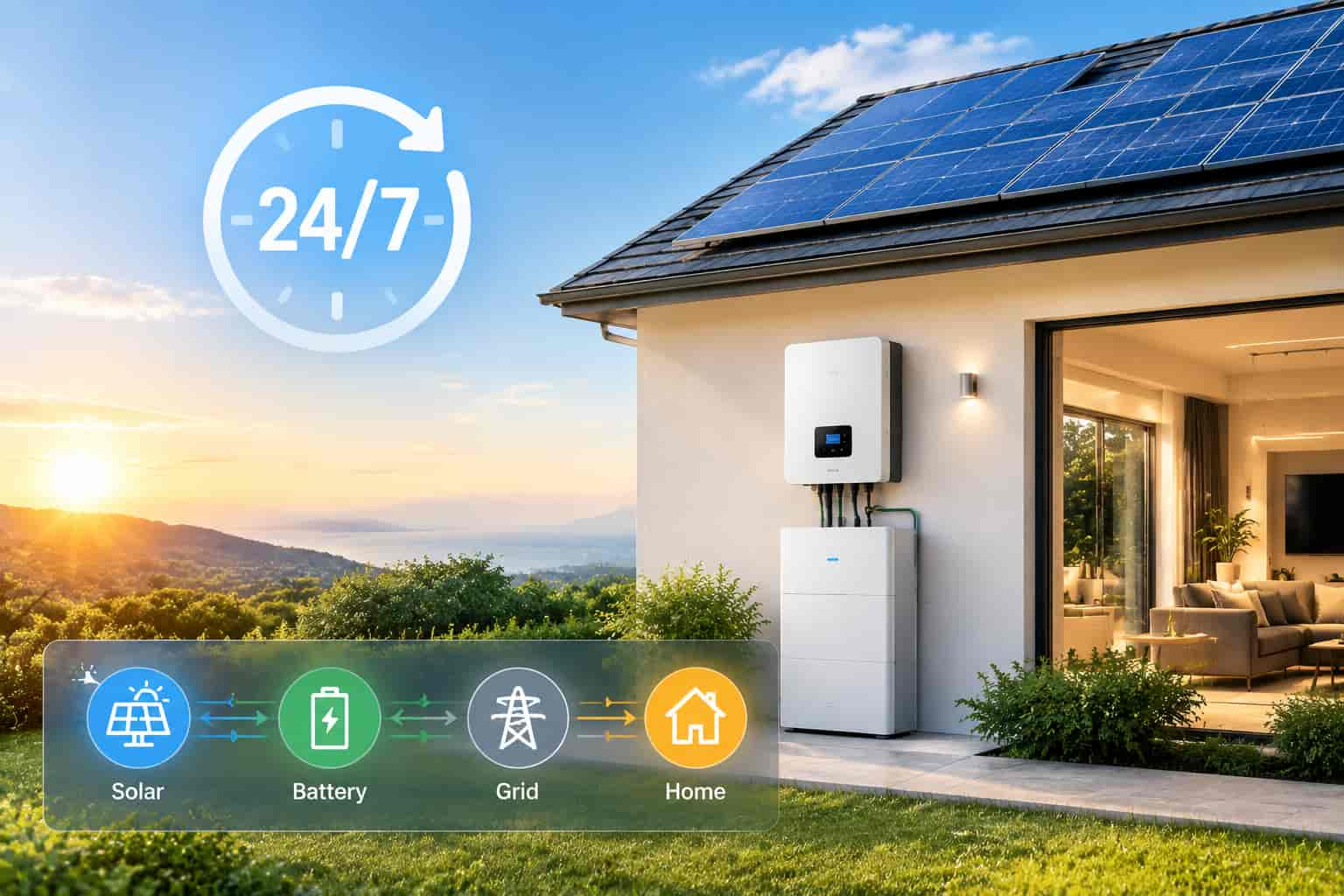
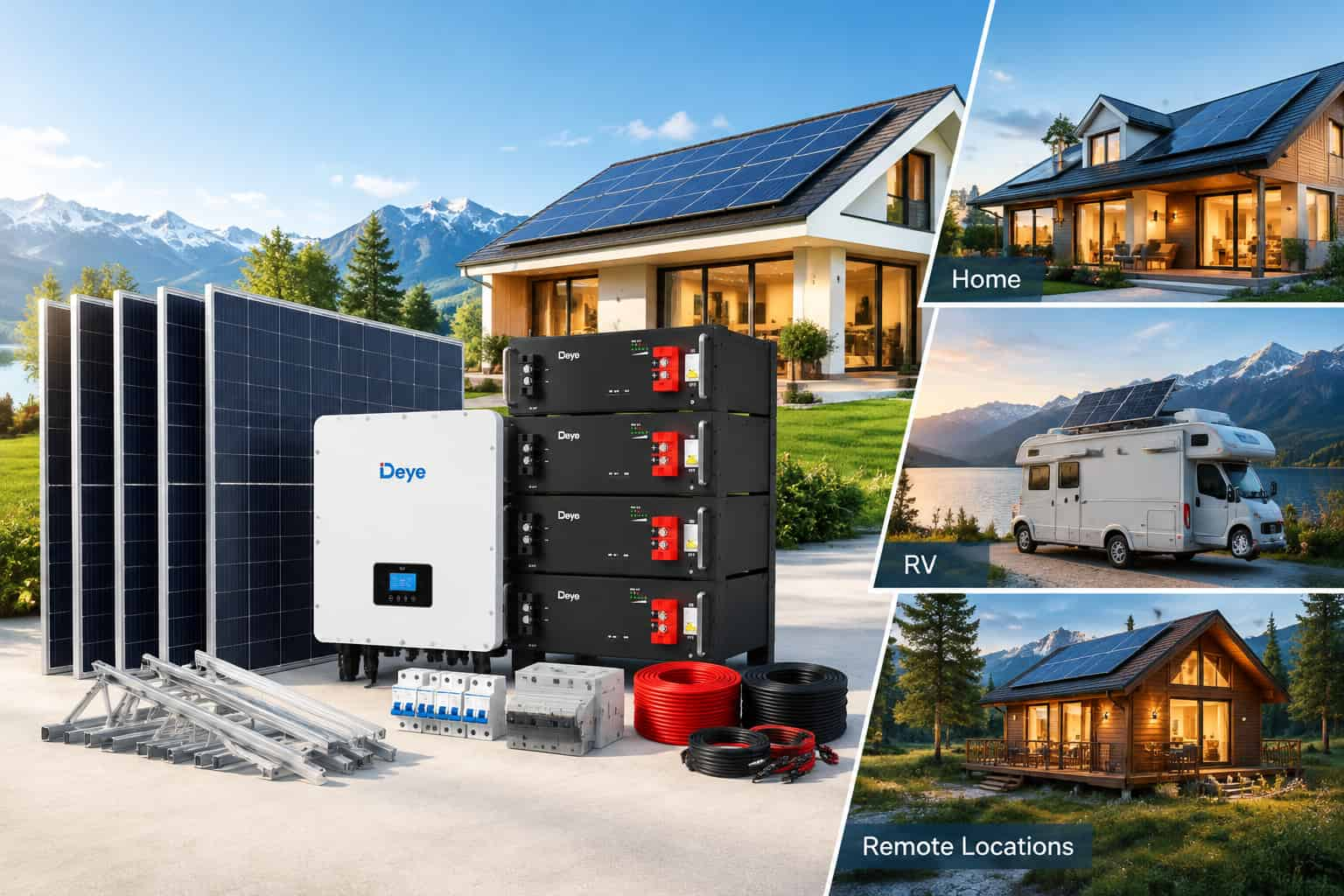
A typical home solar EV charging system includes:
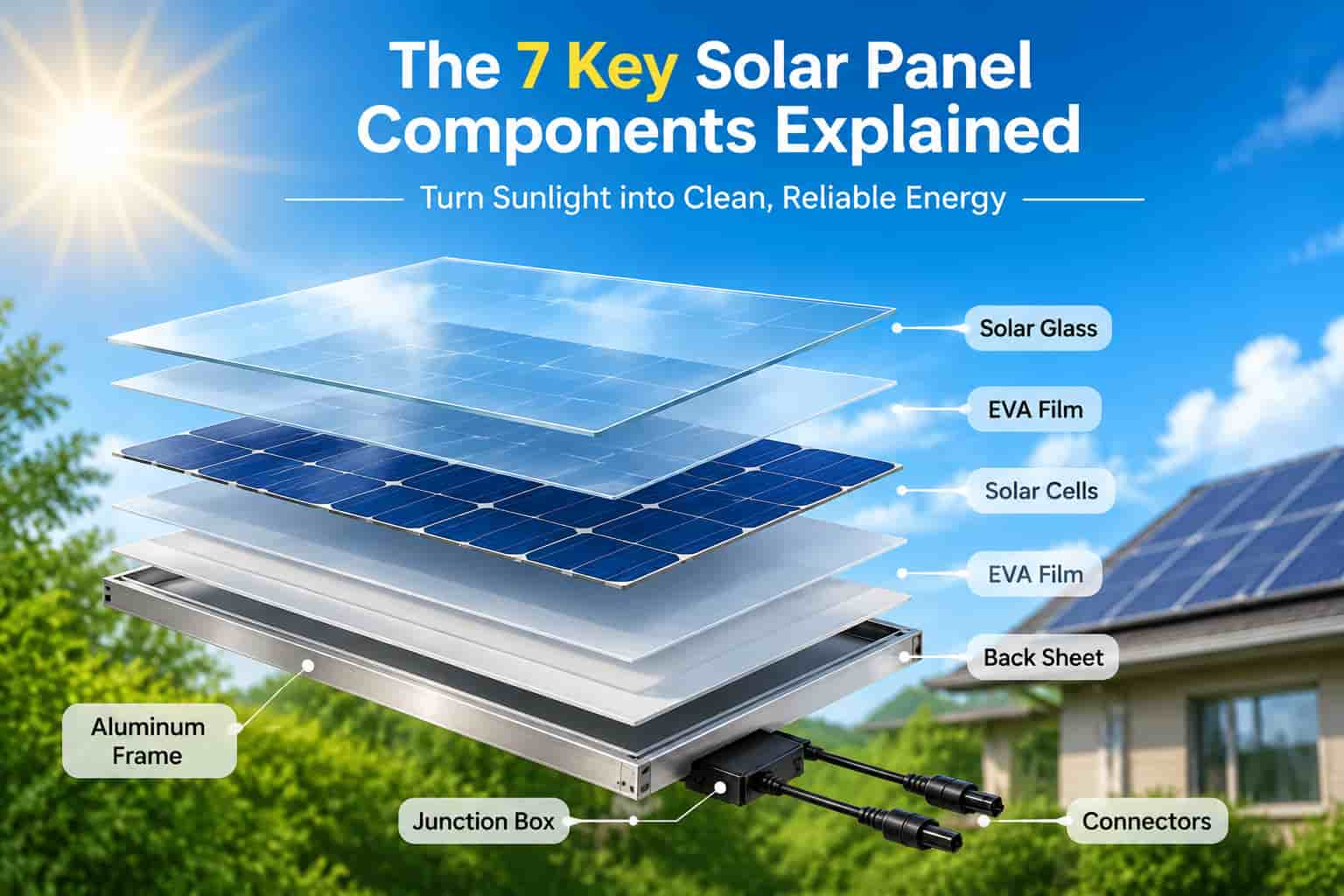
Solar panels: Generate renewable electricity from sunlight.
Hybrid inverter: Manages electricity conversion and power distribution between solar panels, batteries, household loads, and the grid.
Battery storage: Stores excess solar energy for use when solar production is unavailable.
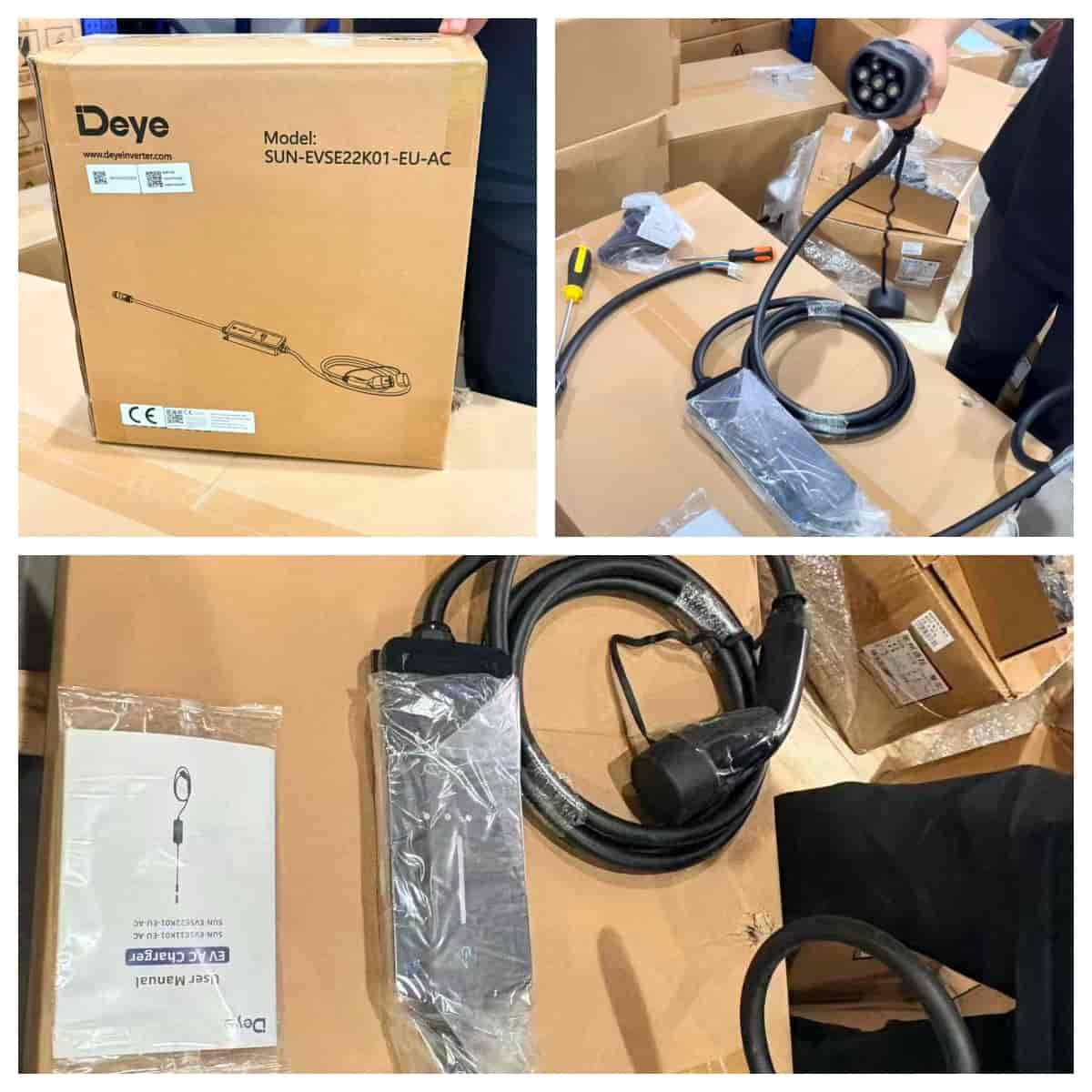
EV charger: Supplies electricity to the vehicle.
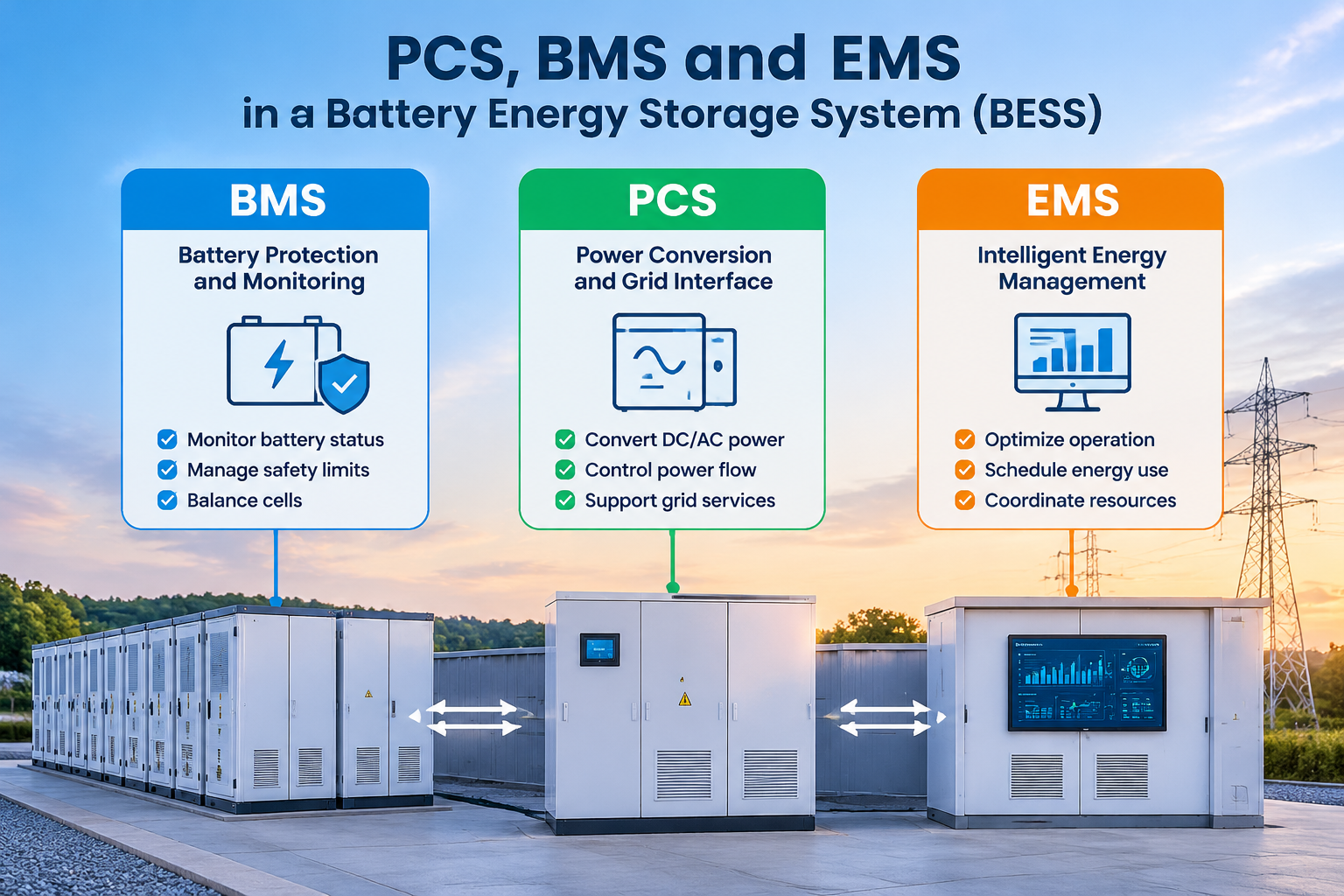
Smart meter and energy management system: Monitor electricity flows and help optimize energy consumption.
This integrated configuration offers greater flexibility and helps homeowners make better use of their solar energy.
For households that want more energy independence, consider using solar panels, a hybrid inverter, and a compatible lithium battery.
6. What About EV Charger Installation and Electrical Capacity?
Choosing the right solar panel capacity is only part of the process. Your home's electrical infrastructure must also support EV charging.
There are two common types of residential EV chargers: Level 1 and Level 2. Level 2 chargers offer faster charging and can be integrated into a residential solar energy system.
However, installing a Level 2 charger may require checking your home's electrical panel and available electrical capacity.
In some cases, load management can help prevent an expensive electrical panel upgrade by controlling how electricity is distributed among household appliances and the EV charger.
Before installation, have a qualified electrician assess your electrical panel, wiring, circuit capacity, and charger requirements.
You should also consider future expansion when planning your system. Installing equipment with suitable capacity and compatibility can make it easier to adapt your home energy system as your needs change.
7. Is Installing Solar Panels for EV Charging Worth It?
For many homeowners, combining solar panels with an EV can offer long-term financial and environmental benefits.
The main advantages include:
Lower charging costs: Generate part or all of your EV charging electricity using solar power.
Reduced dependence on grid electricity: Use renewable energy generated at home.
Better energy management: Combine solar generation, battery storage, and EV charging in one system.
Long-term flexibility: Expand your solar and storage capacity as household electricity demand increases.
The actual savings depend on local electricity prices, solar installation costs, incentives, system performance, and charging habits.
A well-designed solar energy system can also meet your home’s power needs beyond EV charging. It becomes a more complete home energy investment.
Conclusion
So, how many solar panels do you need to charge an EV?
For a typical electric vehicle, about 7 to 14 solar panels may be needed.
It uses 450W panels and regional solar production ratios. Your actual requirements will depend on your EV model, annual mileage, location, and total household energy consumption.
More importantly, solar panels are only one part of a complete home EV charging solution. Combining solar power with a compatible hybrid inverter can help you use clean energy better.
Adding battery storage can help you store extra solar energy for later.
Using an EV charger can help you charge your car with clean energy. It also helps when the sun goes down.
AtMVC Solar, we provide solar panels, hybrid inverters, lithium battery storage, and customized solar energy solutions for residential applications. Whether you are planning a new home solar install or adding EV charging to an existing system, compatibility matters. Choosing the right parts and system setup is essential.
Contact MVC Solar to explore a customized home solar and EV charging solution for your energy needs.