
The 7 Key Components of a Solar Panel Explained
Over the past decade residential solar energy adoption has grown significantly worldwide. More homeowners are choosing solar panels as an effective way to reduce their reliance on traditional electricity grids, lower monthly energy bills, and minimize their carbon emissions. These benefits have made solar power an increasingly popular solution for residential energy needs.
Despite this growing popularity, many homeowners are still unfamiliar with the essential components of a solar panel and the role each part plays in generating electricity. How do solar cells capture sunlight? What happens during the energy conversion process? And how does the electricity produced by a solar panel become suitable for powering everyday household appliances?
the basic structure and working principles of solar panels can help homeowners evaluate different solar products, make informed purchasing decisions, and better understand how a residential solar power system operates.
In this guide, we will explore the 7 main components of a solar panel, explain their individual functions, and show how they work together to convert sunlight into usable electrical energy.
What are the Components of a Solar Panel?
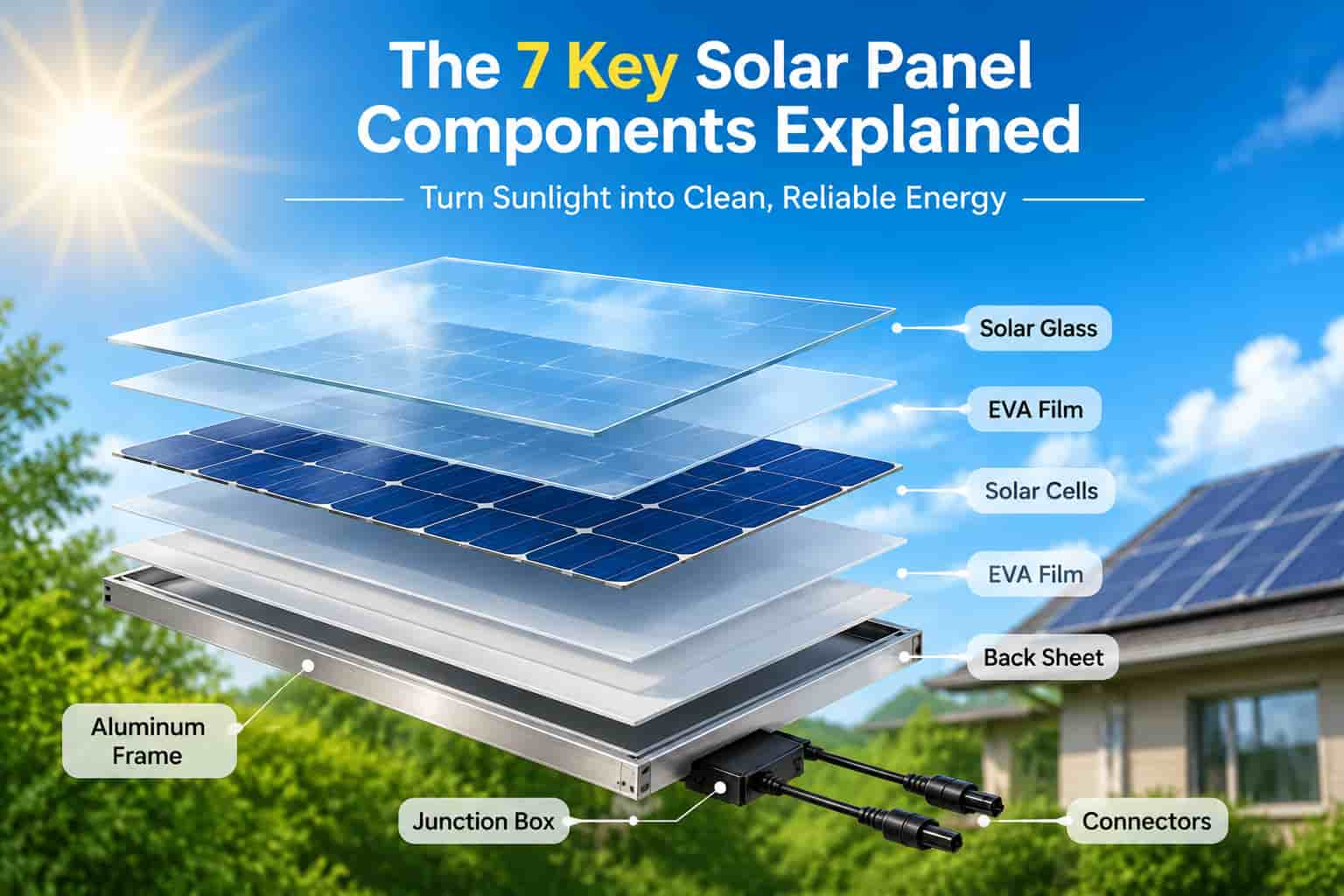
Before we understand how solar panels work, here is a brief look at the solar panel parts and components that this blog will discuss:
- Solar cells
- EVA films
- Solar glasses
- Back sheets
- Aluminum frames
- Junction boxes
- Connecters
You might be interested in this article:Solar Panel Installation Process — A Step-by-Step Guide
Understanding Solar Panel Parts
Solar cells
Solar cells are the fundamental building blocks of a solar panel and play a central role in electricity generation. Commonly referred to as photovoltaic (PV) cells, they are typically manufactured using semiconductor materials such as silicon. Unlike conventional batteries, solar cells do not rely on chemical reactions or external fuel sources. Instead, they generate electricity by converting sunlight into electrical energy through the photovoltaic effect.
To form a complete solar panel, multiple solar cells are electrically connected and arranged together. These cells are generally rectangular or hexagonal in shape and are assembled into a panel structure supported by a protective frame.
Solar cells are available in various sizes, technologies, and configurations, all of which influence the overall efficiency and power output of a solar panel. Traditional residential solar cells typically converted around 20% of captured sunlight into usable electricity. With continuous advances in photovoltaic technology, modern high-efficiency solar cells can achieve significantly higher conversion rates, improving the overall performance of today's solar panels.
EVA films
EVA film (ethylene vinyl acetate) is an essential encapsulation material in solar panel manufacturing. It is laminated on both sides of the solar cells to provide protection while maintaining high light transmission.
Its main function is to prevent moisture and air from damaging the photovoltaic cells. EVA also offers good resistance to heat, humidity, and environmental aging, while helping absorb mechanical stress and vibrations.
Low-quality EVA film may accelerate material degradation, causing yellow or brown discoloration that reduces light transmission and affects solar panel performance.
Solar Glass
Solar glass is a protective layer installed on the front of a solar panel to safeguard the photovoltaic cells. Usually made of tempered glass with a thickness of around 3–4 mm, it protects the module against rain, snow, wind, dust, and other external impacts.
To improve light absorption, solar glass is often treated with an anti-reflective coating that reduces sunlight reflection and allows more solar energy to reach the PV cells.
With its excellent transparency, mechanical strength, and weather resistance, solar glass helps maintain solar panel efficiency and long-term durability.
Back Sheet
The solar panel backsheet is the protective outer layer located on the rear side of a PV module. It provides electrical insulation, prevents moisture penetration, and protects solar cells from environmental damage.
In addition, the backsheet helps protect the internal components from heat, humidity, and other external factors, supporting the module's structural integrity and long-term reliability.
Aluminum Frame
The aluminum frame provides structural support for solar panels by securely holding the laminated components together. Typically manufactured from lightweight, corrosion-resistant aluminum, it offers excellent mechanical strength and helps the module withstand wind loads, pressure, and harsh weather conditions.
Solar panel frames are commonly available in silver or anodized black finishes. Besides improving durability, the frame makes installation and mounting more convenient.
Junction Box
The solar panel junction box is installed on the rear of a PV module and serves as the connection point for its electrical cables. It safely collects and transfers the electricity generated by solar cells to the external circuit and inverter.
It also houses bypass diodes, which help prevent power loss and reduce the risk of hot spots when parts of a panel are shaded.
Connectors
Solar panel connectors provide secure electrical connections between PV modules and other system components. They allow electricity generated by solar cells to flow through interconnected cables toward the inverter.
Designed for reliable power transmission, connectors offer stable electrical contact and help ensure safe and efficient operation of a solar power system.
How Solar Panel Components Work Together
Each component of a solar panel plays a specific role in converting sunlight into usable electricity.
The process begins when solar cells absorb sunlight and generate direct current (DC) electricity through the photovoltaic effect. Meanwhile, the solar glass, EVA film, and backsheet protect the cells from moisture, dust, and other environmental factors, helping maintain stable energy production.
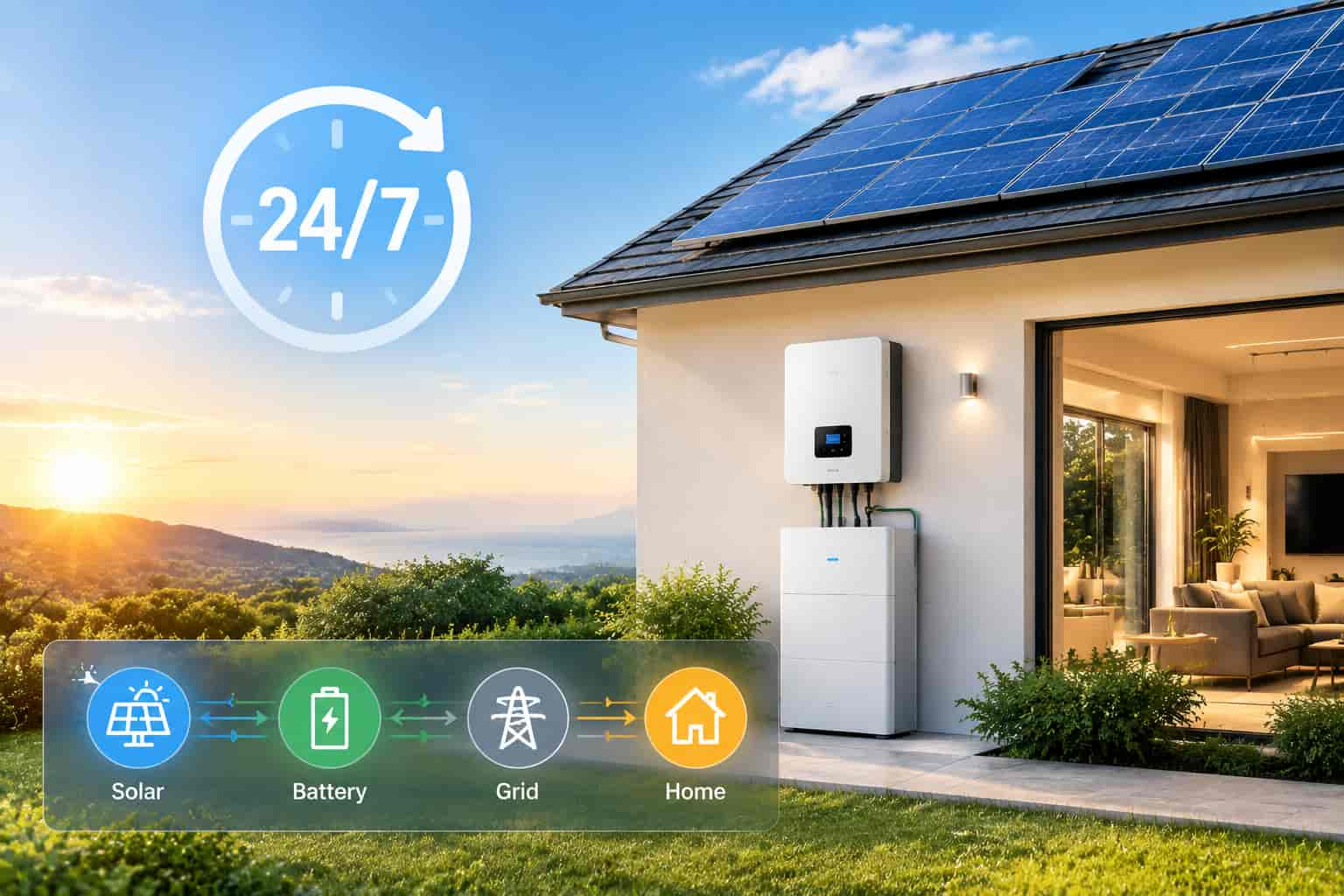
The generated DC electricity is then transmitted through solar cables and connectors to an inverter, which converts it into alternating current (AC) for household appliances and electrical equipment.
Any excess electricity can be stored in a solar battery storage system for later use, such as during nighttime or cloudy weather. Alternatively, surplus power can be exported to the local utility grid through a net metering arrangement, depending on local regulations and system configuration.