
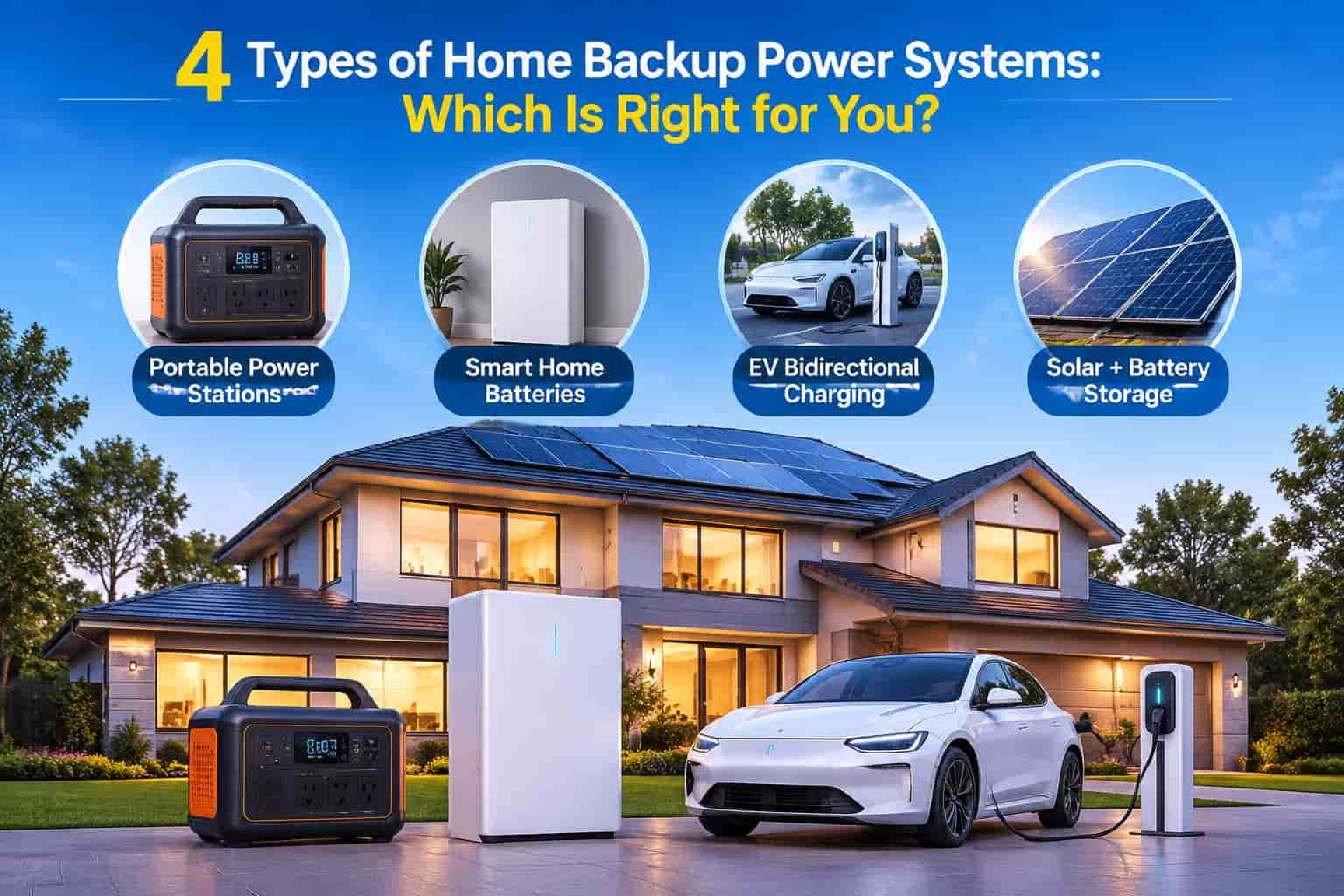
4 Types of Home Backup Power Systems: Which One Is Right for Your Home?
Power outages are becoming increasingly common and disruptive. When electricity is unavailable, the impact goes far beyond losing lighting. Refrigerators stop working, heating systems shut down, internet connections disappear, and essential medical equipment may no longer receive power.
A reliable home backup power solution can help prevent these problems.Home battery storage systems provide an effective way to maintain electricity during unexpected outages and improve household energy management.
Today, homeowners and renters have several options to choose from. These include compact, portable power stations for essential appliances. They also include smart battery systems and electric vehicles. These can supply electricity to a home.
Let’s explore four types of home backup power options, from basic portable units to solar and battery systems. We’ll also help you pick the best option for your energy needs.
Level 1: Portable Power Stations for Essential Household Appliances
A portable power station is one of the most accessible ways to introduce backup power into your home. It works like a large rechargeable battery bank. It stores electricity to run essential devices when the grid is unavailable.
One of its biggest advantages is convenience. Unlike permanently installed home battery systems, portable power stations generally require no electrical installation or professional assistance. Simply charge the unit using a standard wall outlet and connect the appliances you need during an outage.
Depending on its size and power, a portable power station can run different devices.
It can power laptops and Wi‑Fi routers.
It can also run lights and refrigerators for hours.
These compact energy storage devices are particularly useful for short power interruptions, camping, and home office applications. Mid-range models generally cost between $500 and $1,500, making them a relatively affordable backup power option.
However, portable power stations have some limitations. Recharge them regularly, and ensure you have sufficient battery capacity before an unexpected outage occurs.
For households looking for a more automated backup solution, the next generation of battery technology offers additional convenience.
Level 2: Smart Plug-and-Play Battery Systems for Apartments and Renters
Smart plug-and-play battery systems offer a more intelligent approach to residential backup power. Rather than serving only as emergency equipment, these batteries can manage household electricity consumption as part of everyday life.
Designed for convenient operation, plug-and-play batteries connect between a wall outlet and household appliances. They store electricity when available and automatically supply power when needed, without requiring complex installation or permanent modifications to the property.
Another important advantage is their ability to optimize electricity usage. These systems can charge batteries when electricity prices are low. They can use stored energy when grid power is less renewable.
This process helps users manage their energy consumption while potentially reducing electricity expenses.
Some advanced systems also support communication between multiple battery units installed throughout a home. By coordinating their operation, these batteries can prioritize essential appliances and provide more reliable backup power when electricity demand changes.
Apartment residents and renters may not be able to install a full home solar battery system. Smart plug-and-play storage offers a flexible alternative.
Level 3: Use Your Electric Vehicle as a Home Backup Battery
Your electric vehicle (EV) may offer more than transportation. With bidirectional charging technology, its onboard battery can also become a valuable source of backup electricity for your home.
Many electric vehicles contain substantial battery capacity, potentially providing enough energy to support household electricity needs for extended periods. As bidirectional charging becomes more widely available, some EV owners can use this stored energy beyond driving.
Bidirectional charging allows electricity to move in both directions between an EV and an external power source. Three main applications are Vehicle-to-Load (V2L), Vehicle-to-Home (V2H), and Vehicle-to-Grid (V2G).
Vehicle-to-Load (V2L)
Vehicle-to-Load technology allows an electric vehicle to supply electricity directly to external electrical devices.
It is a widely available bidirectional power feature. Many newer EV models support it. These include Chevrolet, Hyundai, Tesla, Kia, and other brands.
With an adapter typically costing around $100–$200, users can connect compatible household appliances directly to their vehicles. This makes an EV function similarly to a portable power generator.
Some vehicles, like the Ford F-150 Lightning, have built-in household power outlets. These outlets make it easy to run several electrical devices.
Vehicle-to-Home (V2H)
Vehicle-to-Home technology takes EV backup power further. It lets the car’s battery power an entire home.
With a professionally installed bidirectional charger, an electric vehicle can function as an additional home energy storage resource. It can charge during off-peak electricity hours and supply stored power to the home when electricity prices increase.
Under normal conditions, electricity flows from the charging system into the vehicle. During a power outage or when electricity is expensive, the system can reverse the process. It can send energy from the EV battery back to the home.
When you pair solar power with a smart energy system, you can manage power flow. It can then decide if the home uses solar panels, the grid, or the vehicle battery.
A complete V2H installation generally costs between $3,000 and $8,000. Although you need professional installation, this option may be cheaper for EV owners. It could cost less than buying a separate whole-home battery system.
Vehicle-to-Grid (V2G)
Vehicle-to-Grid technology enables compatible electric vehicles to send electricity directly back to the utility grid.
This capability creates additional opportunities for EV owners to participate in energy management programs. Depending on the local utility's policies, vehicle owners may receive financial compensation for supplying electricity to the grid.
For example, one program at the University of Delaware generates approximately $1,200 in annual earnings per EV.
Battery degradation is another concern when using an electric vehicle for home backup power. However, the additional energy usage from occasional bidirectional charging may be relatively small compared with the vehicle's overall battery capacity.
For example, powering a home for one hour may use about 1% of an EV battery. This equals about one-hundredth of a full charge cycle.
Several automakers, including GM, Toyota, BMW, Volvo, and Porsche, have reportedly updated their warranty policies. These updates address bidirectional charging and give EV owners more confidence.
Level 4: Integrated Home Energy Storage with Solar Panels and Batteries
For homeowners who want a reliable backup power option, a home battery storage system offers more energy independence.
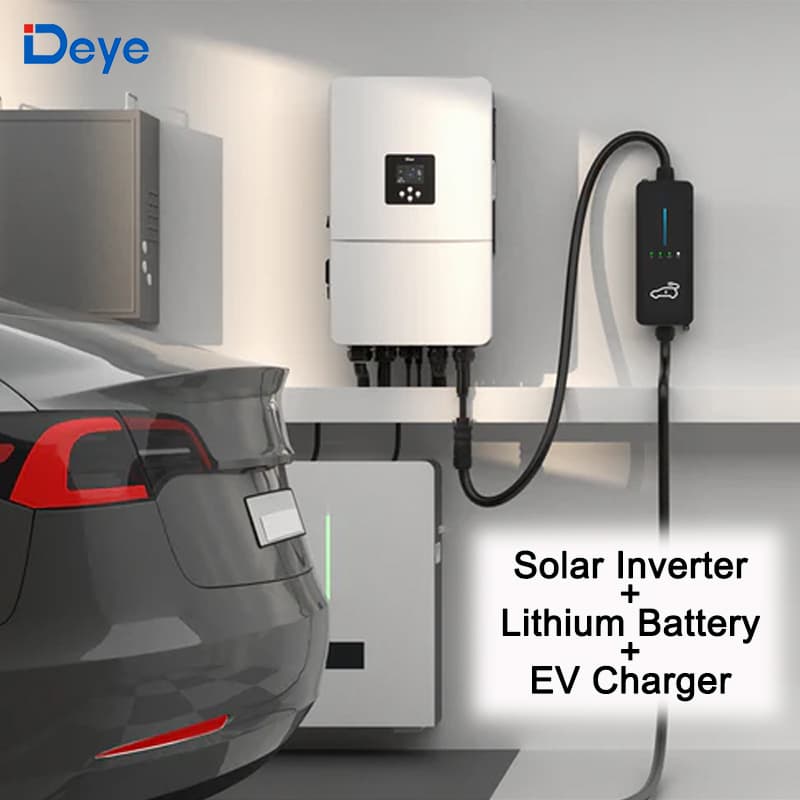
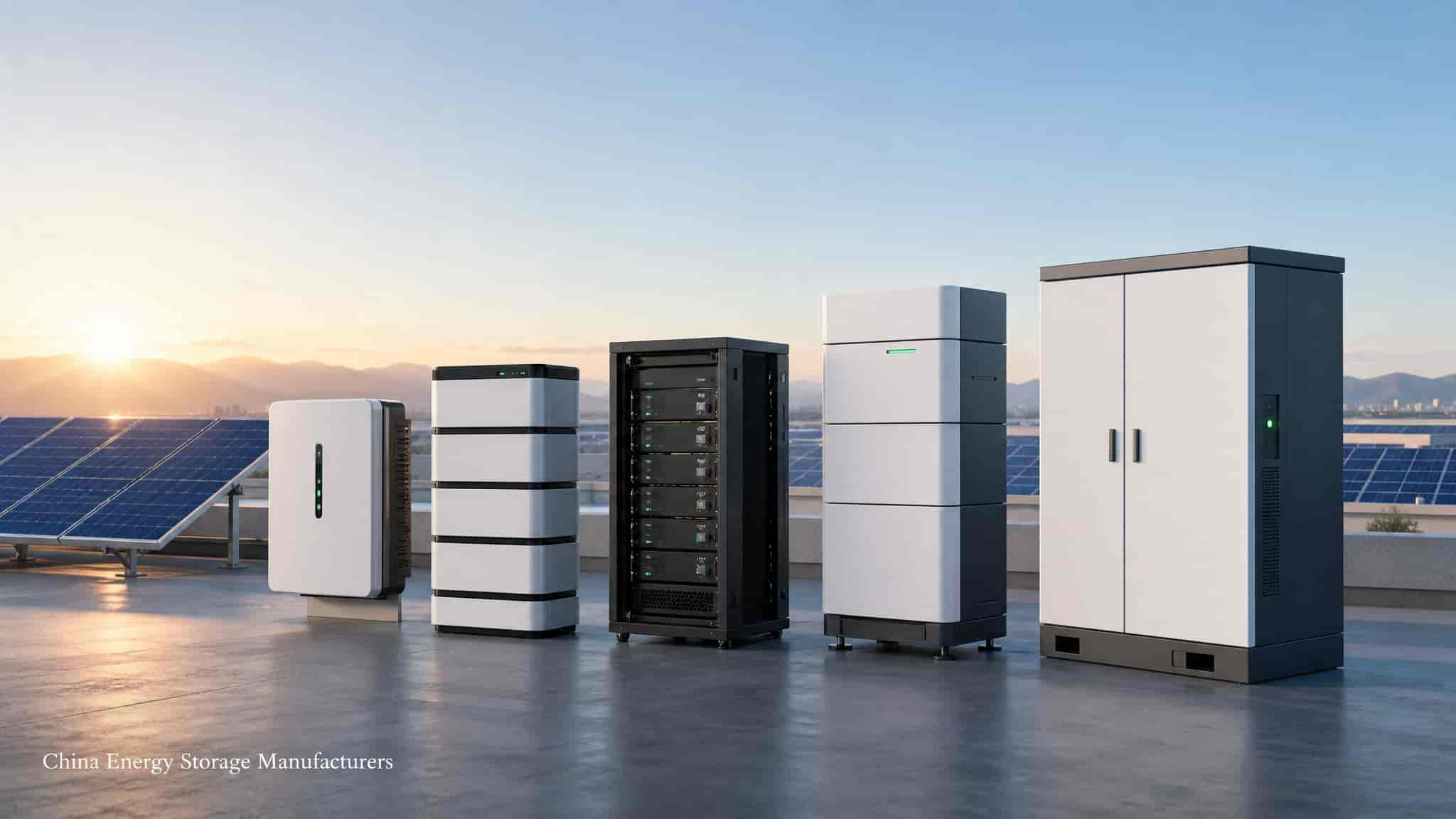
Whole-home battery systems, like the Deye BOS-G and Dyness Powerbrick Max20, store large amounts of electricity. Depending on system capacity and household use, they can power a whole home for several hours. They can also keep essential appliances running for several days.
A complete home battery installation often costs about $15,000. State and local incentives may help reduce the upfront cost.
The growing demand for reliable backup electricity also reflects the increasing importance of residential energy storage. According to the original industry figures,home battery installations increased by 132% between 2024 and 2025.
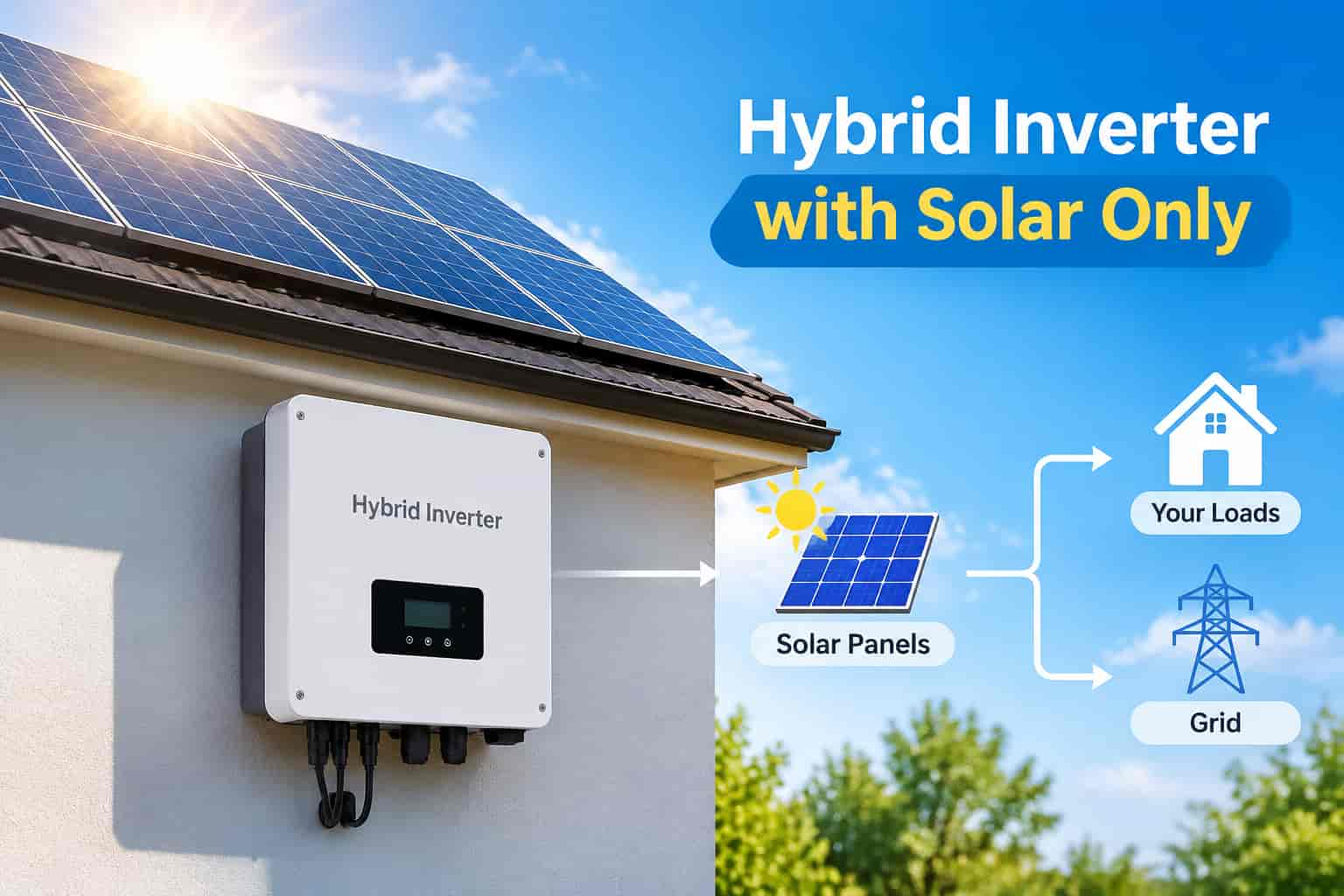
Although a home battery can run without solar panels. Using solar PV with battery storage can greatly increase the value of a home energy system.
Without battery storage, solar panels generally export excess electricity to the utility grid. The financial return depends on the local net metering policy. Some homeowners receive reasonable electricity credits, while others receive relatively limited compensation for the surplus power they generate.
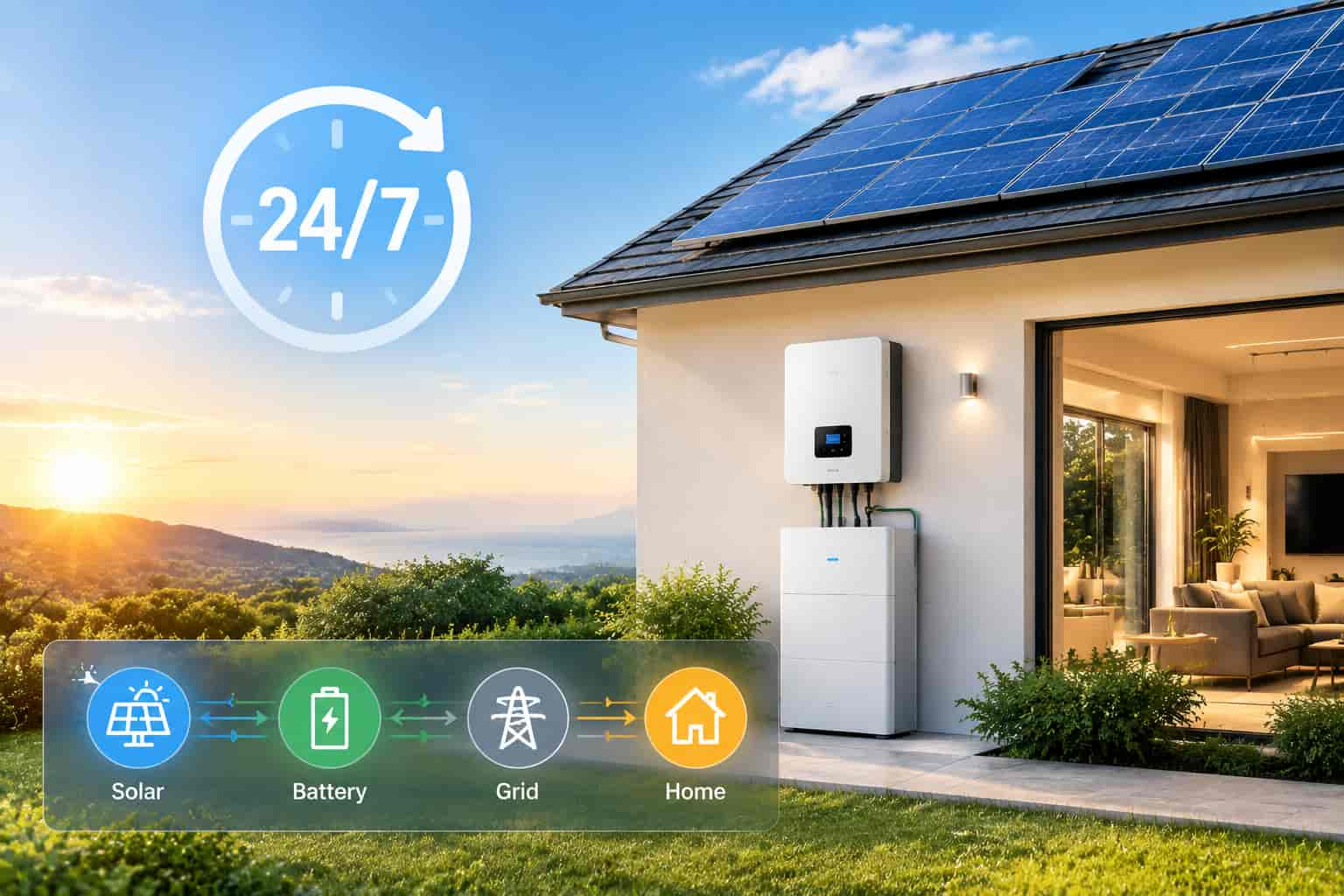
A solar battery storage system provides another option: storing excess solar energy for later consumption. Homeowners can use the stored electricity at night, during expensive peak-rate periods, or when unexpected grid outages occur.
More importantly, when you set up the system correctly, solar panels can keep making power. They can also recharge the battery during a grid outage. This provides an additional source of backup energy as long as sufficient sunlight is available.
For households in areas with high electricity prices, solar panels can save a lot of money over time.
If you have time-of-use billing, adding a battery can increase those savings.
California is one example. Solar-plus-storage systems can reduce electricity costs over time.
They may save about $21,000 to $44,000 more than solar-only systems.
Of course, achieving complete off-grid energy independence requires a much larger investment. Providing enough stored power to run a whole home on its own for one day may cost over $25,000 in batteries.
For many households, a grid-tied solar and battery system can power essential appliances. It offers a practical balance of energy security, system cost, and long-term savings.
Choosing the Right Home Backup Power System
No single backup power solution works for every household. The right choice depends on your living arrangements, electricity consumption, budget, and expectations for backup power.
Portable power stations are a simple solution for essential devices. Smart plug-and-play batteries offer more ease for renters and apartment residents. Electric vehicles with bidirectional charging can supply extra power to a home. Solar and battery systems together offer more complete energy control for homeowners.
As energy storage technology continues to develop, residential battery systems are becoming increasingly accessible and versatile. Depending on your location, government incentives and local energy policies may also help make these solutions more affordable.
With electricity grids facing growing challenges from extreme weather and changing energy demands, preparing for power interruptions is becoming increasingly important.
The future of residential energy is not simply about generating electricity. Storing, managing, and using that energy efficiently whenever your home needs it.